


Commonwealth Bank of Australia yesterday scrapped its chief executive’s bonus for damaging the bank’s reputation amid allegations it broke money-laundering and counter-terrorism financing laws, but said he retained the board’s confidence.
Australia’s financial intelligence agency last week accused the bank of roughly 53,700 breaches, launching a civil court action that could see the country’s biggest lender fined several billion dollars.
The case is the largest of its kind in Australian corporate history, and sent Commonwealth Bank shares sliding for their biggest one-day decline in 18 months on Friday.
CBA’s board said yesterday it had cut short-term bonuses to zero for the chief executive, Ian Narev, and other top executives for the year to June 30, 2017.
“In reaching this conclusion the overriding consideration of the board was the collective accountability of senior management for the overall reputation of the group,” chairman Catherine Livingstone said in a statement.
The accusations have revived calls for a powerful judicial inquiry into Australia’s banking system following a series of scandals including insurance fraud and interest rate rigging in recent years. Treasurer Scott Morrison, who has previously rejected pressure for such an inquiry, told parliament yesterday the government was prepared “to consider all options”.
An inquiry known as a Royal Commission could have the ability to interrogate bank executives and demand full disclosure of internal documents. The proposal has widespread public support and the backing of the opposition Labor Party.
“Narev retains the full confidence of the board,” the bank’s statement said.
Sharing some accountability, Livingstone said directors’ fees had been cut by 20% for the 2018 financial year.
The move, designed to smoothe public concerns, came a day before the bank releases its annual results today, with analysts tipping record cash earnings of A$9.8bn ($7.78bn).
Commonwealth Bank paid Narev A$2.9mn in short-term bonuses as part of a total package of A$8.8mn in 2016. In order to prevent a board spill being triggered at the annual general meeting in November, the bank needs to ensure its remuneration report is approved by more than 75% of voting shareholders, following a “first strike” against it in 2016.
Under Australian law, a board spill can be triggered if two consecutive remuneration reports are voted down.
Stephen Mayne, a director at the Australian Shareholders’ Association, which aggregates about A$500mn worth of CBA’s shareholder proxy votes, said if that happened the bank would need to hold a special shareholders meeting spilling the board within 90 days of the meeting.
“That is something that could be very much in focus in the mind of the board, that their own positions could be under scrutiny in an entire boards spill,” he said. The bank is accused of systematically failing to identify, monitor and report suspicious transactions totalling over A$77mn, and failing to act promptly on police instructions to suspend suspicious accounts.
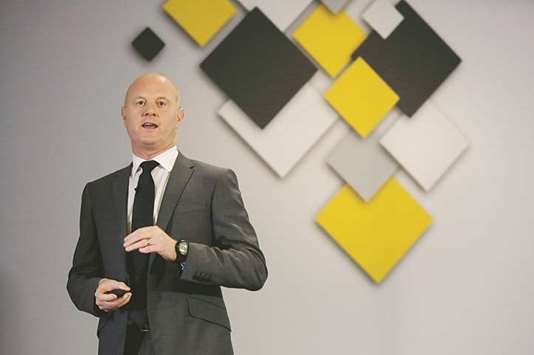
Narev: Facing judicial inquiry.