


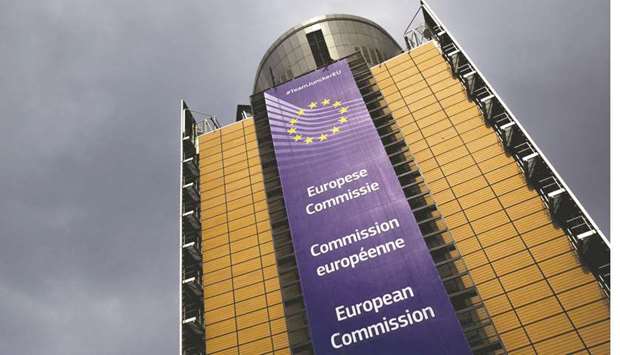
The European Commission, the EU’s executive arm, is racing to determine whether the rules in countries such as the US, Switzerland and Singapore are as tough as those that start in Europe on January 3. Without such equivalence decisions, MiFID II could disrupt trading on platforms in those countries, fracturing global markets and potentially driving up costs.
“If it were interpreted overly rigidly, or equivalence didn’t come through, you’d have a form of financial nationalism on the part of the EU,” Tim Cant, counsel at Ashurst law firm in London, said in an interview about the effect on equity markets. “It’s a bit like fortress Europe and rolling back two or three decades of globalisation.”
The last-minute dash to avert market upheaval shows the global implications of the EU’s updated Markets in Financial Instruments Directive, a vast rewrite of financial oversight that seeks to boost investor protections and transparency in stocks, bonds, derivatives and commodities. It also underlines the difficulties regulators around the world face in aligning their responses to the 2008 financial crisis.
“There is still a lot to be done” before January 3, Tilman Lueder, head of the European Commission’s securities markets unit, said in June at a conference of European exchange executives. “The biggest challenge between now and end of the year is how we deal with our international partners” on equities and derivatives, he said.
The European Commission is working towards adoption of the relevant decisions by the end of the year, according to a commission official. The law has been on the books for more than three years.
Arriving at an agreement on the equivalence of rules has never been a simple or speedy task. The commission spent about four years negotiating with the US Commodity Futures Trading Commission to get a deal on a separate issue, the clearing of derivatives.
The EU’s equivalence process is also in the spotlight because it will play a role in determining what access UK-based firms will have to the single market after Brexit. Equivalence allows companies that that don’t have their own regulated units in a market to do business there nonetheless. Lack of such a feature would require them to set up shop or expand their local offering.
Many large companies have shares listed on exchanges around the world, but the new rules state that if a stock is traded on an EU-regulated platform, EU investment firms must do all their transactions there.
Venues outside the bloc can be used only if the home country’s rules are deemed equivalent. So without an equivalence ruling, trading could be forced off platforms outside the EU, even if that’s where most activity occurs, and on to a smaller EU venue.
Take Apple, which has its primary listing on New York- based Nasdaq and also has shares that trade on platforms elsewhere, such as Frankfurt-based Deutsche Boerse’s Xetra exchange. The discrepancy between the two highlights how jarring such a shift would be: Apple’s shares on Nasdaq had an average daily value traded of $3.8bn in the past year, compared with €3.4mn ($4mn) on Xetra, according to data compiled by Bloomberg.
“One of the underpinnings of MiFID is that people have to have best execution,” Nick Dutton, head of compliance at CBOE Holdings’ Bats Europe unit, said in an interview. “People could be getting demonstrably worse prices because they’re trading where there is worse liquidity.”
Deutsche Boerse Group said in a statement that it’s “expecting an equivalence decision to be taken at the beginning of 2018, but at the moment it is still too early to speculate on its outcome.”
A similar equivalence decision is crucial for the $483tn global market in derivatives, with traders on desks across the world doing deals in US dollars, euros, yen and other currencies. The commission must determine that non-EU trading venues are subject to effective oversight and that their regulators have a system for recognising EU platforms. The commission is in talks with the CFTC, which supervises swap-execution facilities.
When similar US swap-trading rules began in 2013, trans- Atlantic volumes declined as big banks moved business in euro- denominated contracts to their European offices from the US, according to research published last year by the Bank of England.
The International Swaps and Derivatives Association, a lobbying group whose members include Barclays and JPMorgan Chase & Co, has pressed authorities to reach an equivalence deal based on the broad outcomes of regulations in the US and EU rather than rule-by-rule comparisons.
Scott O’Malia, ISDA’s chief executive, has said there is a “strong foundation” for an equivalence finding and that the association “would encourage regulators to work towards a quick determination to avoid a detrimental impact on liquidity.”
The two sets of rules require reporting and transparency of information about trades, even though there are some notable differences, according to ISDA. One is that US regulations specify how trading should occur – how many price quotes must be solicited on a venue, for example – while EU rules have others means to achieve pre-trade transparency and price competition.
Those differences may go a long way toward determining where banks, hedge funds and other firms choose to do their deals. The BoE study said that big banks might have shifted their euro trading to Europe, where MiFID II was years away from being imposed, as a way to avoid the US rules that could have helped competitors chip away at their dominance.