


Since the launch of a new sepsis programme at Hamad Medical Corporation (HMC) in September 2016, the organisation has implemented a number of initiatives aimed at boosting care services for all patients diagnosed with sepsis.
Sepsis is a medical emergency and a life-threatening condition that arises when the body’s response to a severe infection damages its own tissues and organs. If not recognised early and treated promptly, sepsis can lead to shock, multiple organ failure and death.
Additionally, those who survive sepsis are more likely to develop long-term complications, including limited exercise tolerance and a decline in cognitive function.
HMC’s sepsis programme is a corporation-wide initiative involving collaboration between the Critical Care Centre and the offices of the chief medical officer, chief nursing officer and chief quality officer, HMC has said in a press statement.
Several HMC departments are involved in the preparation, development and delivery of the sepsis programme, including the Hamad Healthcare Quality Institute, Nursing Informatics, the Clinical Information System, Hamad International Training Centre, Health Information and Communication Technology and teams from each facility.
Dr Ibrahim Mohamed Fawzy, director of the Critical Care Centre and deputy medical director, Ambulance Service at HMC, highlighted the benefits of the sepsis programme. “Our commitment to providing the very best care for patients with sepsis has been an ongoing priority for many years at HMC and the launch of the sepsis programme has enabled our care teams to work within an evidence-based framework to address this large scale condition,” Dr Fawzy explained.
Sepsis was a topic of discussion at the recent World Health Assembly Committee A meetings, held in Geneva and chaired by HE the Minister of Public Health Dr Hanan Mohamed al-Kuwari. Delegates at the assembly agreed on a resolution to improve the prevention, diagnosis and treatment of sepsis. The resolution encourages governments around the world to strengthen policies and care processes in relation to sepsis.
In support of this resolution, a Sepsis Symposium is being planned by HMC, which will provide continuing professional development for healthcare professionals in the care and treatment of sepsis in Qatar. The fourth Qatar National Sepsis Symposium will be held in Doha on September 16.
Dr Fawzy explained how the HMC sepsis programme has been the catalyst for the formation of a dedicated steering committee for sepsis, which oversees the delivery of care across all HMC facilities. “Operating underneath the steering committee are three work streams, each providing expertise into specific population groups: paediatrics, neonates and maternity care.
The formation of these committees means that HMC has a unified and consistently high-quality approach to sepsis care right across our hospital network,” said Dr Fawzy.
“Education, for both healthcare providers and the public, is central to the success of the sepsis programme,” said Dr Ahmed Labib, senior consultant intensivist and anaesthetist and HMC’s sepsis programme chair, Medical Intensive Care Unit, Hamad General Hospital.
“In the past year, we have organised a number of educational activities aimed at ensuring that the skills and knowledge of our clinical teams are of the very highest international standards,” Dr Labib said.
Dr Labib also noted that a new e-learning package for sepsis is currently in development, which is being designed in collaboration with Hamad International Training Centre. Set to be launched later this year, the package will provide a dedicated sepsis resource for doctors and nurses at HMC.
“As well as educating our care teams, we are committed to raising awareness amongst the general public so that they can recognise the early signs of sepsis,” Dr Labib explained.
“Shivering, extreme pain or discomfort, pale or discoloured skin, loss of appetite, tiredness, and shortness of breath are all potential warning signs for sepsis. If any patients experience one or more of these signs they should inform their doctor immediately,” Dr Labib highlighted.
Moving forward with this programme, HMC aims to establish, for the first time, the Qatar National Sepsis Programme by reaching out to Primary Health Care centres and the Ambulance Service. This will ensure any patients with sepsis will have access to the highest standards of care at any public healthcare facility within Qatar.
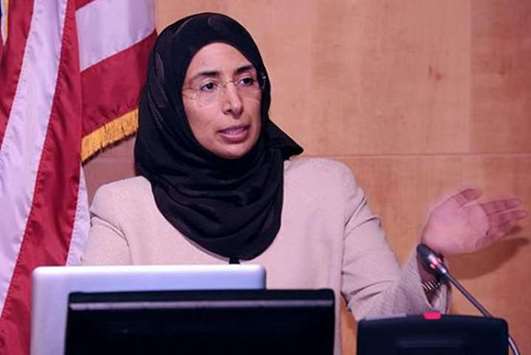
HE Dr Hanan Mohamed al-Kuwari recently chaired the World Health Assembly’s Committee meetings in Geneva.