


Finance Minister AMA Muhith yesterday said the investigation report on a heist at the Bangladesh Bank is not being made public as a case is pending with a court in the Philippines.
The Minister was talking to reporters after attending a seminar on ‘Medical Waste Management’ arranged by Sylhet City Corp at a hotel in the eastern city.
The Bangladesh Bank lost $101mn which was stolen by international cyber hackers from its treasury account with New York’s US Federal Reserve Bank on February 5, 2016.
Following the incident, the government formed a 3-member investigation committee, headed by central bank’s former governor Dr Farashuddin, on March 19 last.
The probe body submitted its preliminary report to Muhith in April while the final report in May 30 last.
But Dr Farashuddin said later the government should carry out further investigation to find out whether suspected Bangladesh Bank officials are involved in the $101mn cyber heist.
Some central bank officials were either involved in the heist intentionally or just got caught up in it, according to him.
“A few of them got into it largely due to their carelessness and idleness. But they should still be held accountable.”
“There are some others who appeared to have done so intentionally. But we don’t have 100% evidence against them and further investigation is required,” he said in an interview.
In its final report submitted to the finance minister on May 30, the probe body mentioned the names of the government agencies that should carry out further investigation into the matter.
Farashuddin, however, didn’t say the number or positions of the suspected central bank officials whose names were mentioned in the report.
He maintained his stance that both SWIFT and the New York Fed were responsible for the theft. “In the final report, we have been able to establish that SWIFT is mainly responsible for the theft. At the same time, the New York Fed is no less responsible. We have evidence.”
Following the theft, the Belgium-based SWIFT and the New York Fed came under huge pressure. The two, however, refuted the claims that their systems were breached during the heist that took place on February 4.
Farashuddin blamed five SWIFT officials who established the link between the SWIFT platform at the Bangladesh Bank and the real time gross settlement (RTGS).
“This is not a secret. The main problem lay with the linking of the RTGS and the SWIFT platform. It was completely a foolish step. There was no point in doing that.”
The RTGS deals with local transactions whereas the SWIFT platform has been used for Bangladesh’s international transactions since 1995, he said. By linking the two, they had created a local area network of more than 5,000 computers and the defence was gone, he said.
“It was done at the instructions of the SWIFT people. They still had not explained to the Bangladesh Bank officials how the system works.”
Farashuddin said the cyber theft caused a lot of damage to Bangladesh Bank but it also acted as a warning to the country.
According to the report, in order to ensure the country’s cyber security, regulations and surveillance should be put in place before launching an IT system.
Farashuddin noted that if the probe body’s recommendations for the banking sector are implemented, a strong IT system would be established.
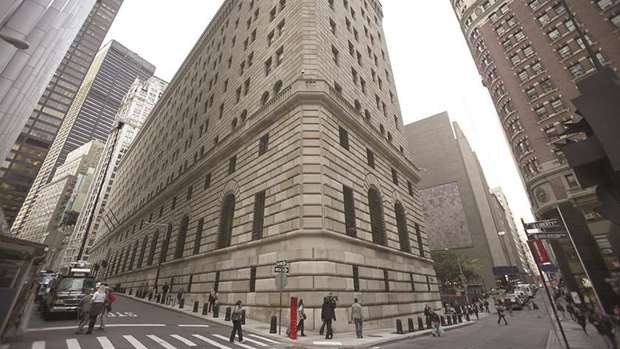
Pedestrians walk past the New York Federal Reserve building.