


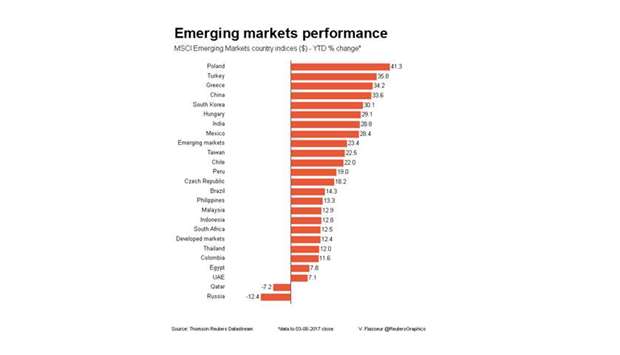
Russian stock markets stayed under pressure after a fresh set of sanctions were slapped on Russia by the United States.
The rouble was set for a third week of falls against the dollar and sovereign dollar bonds’ yield premium to Treasuries at the highest in 2-1/2 years.
But dollar weakness has kept emerging markets aloft, shrugging off geopolitical risks and fresh falls for US tech shares that filtered through to Asian names such as Samsung and put Korean stocks on track for a second week of falls.
MSCI’s emerging equity index rose 0.3% on the day and most currencies firmed versus the greenback, with the rand jumping half a per cent off three-week lows.
Nomura economist Inan Demir said US jobs data could show if wage pressures were rising or not, determining whether the US Federal Reserve would hike rates again in the last quarter of 2017.
“If wage pressures remain sluggish, the next rate hike will be pushed even further off and that will be positive for emerging market sentiment,” Demir said.
Investors are also monitoring the potential for a trade war between the United States and China, with President Donald Trump preparing an investigation into China’s intellectual property and trade practices.
Chinese mainland shares fell 0.5% and ended the week down, although Shanghai-listed stocks eked out a small weekly gain.
The yuan also remained on course for its fourth straight week of gains.
China’s central bank is reportedly considering a widening of the yuan’s trading band after a major Communist party meeting this year, a largely cosmetic move that would burnish its reform credentials as official policy focuses on reducing debt.
Russian stocks fell 0.5% but were set to end the week in the black.
Demir said the latest sanctions bill did not impose very onerous new sanctions on Moscow.
“The macroeconomic impact or the balance of payments growth impact from the sanctions will remain limited,” he said.
The Czech crown was trading just off the new 3-1/2 year highs hit against the euro after the previous day’s rate rise, the first since 2008.
In bond news, Iraq’s new 2023 bond, issued at par, was bid at 100.4 cents, according to Tradeweb.
Venezuelan bonds were marked lower ahead of the inauguration of a legislative superbody, which is seen giving President Nicola Maduro sweeping new powers.
The benchmark 2037 issue from state oil firm PDVSA fell almost one cent.
The bolivar currency’s black market rate tumbled 18% versus the dollar on Thursday.