


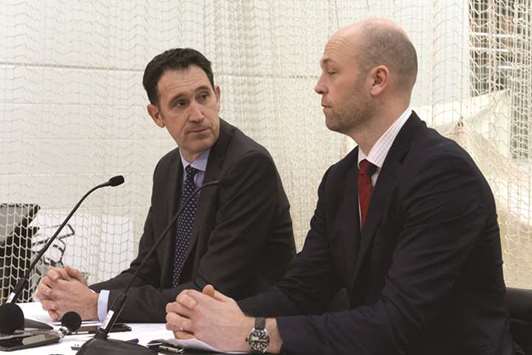
The players appeared to be the winners in the five-year agreement, worth an estimated Aus$500mn (US$396mn), as they retained the revenue-sharing model they had been fighting for — with women cricketers also included for the first time.
The bad-tempered stand-off had been rumbling for months, rattling the game and badly straining the players’ relationship with governing body Cricket Australia.
Some 230 cricketers had been unemployed since the end of June when their contracts expired, putting this month’s Test tour to Bangladesh under serious threat.
“Today’s agreement is the result of sensible compromises by both parties,” said CA chief James Sutherland, adding that the “core issues” had been worked out.
He said the five-year deal would “restore much certainty to the game of cricket”.
“It will allow all players — state and international players — to be contracted immediately and it will also allow the all-important tour of Bangladesh to proceed as planned.”
Captain Steve Smith welcomed the deal on Twitter, adding: “It’s been a long and challenging process and it’s great that we can now get on with playing the game that we all love.
“I’m excited that we can all start working together again to continue to grow our great game.”
At the heart of the dispute had been the divisive issue of revenue-sharing.
CA wanted to scrap the model that has governed players’ salaries since their first memorandum of understanding was brokered 20 years ago.
Players have been paid a percentage of gross revenue for the past two decades, and they argued that changing the system would make them employees rather than partners with incentives to grow the game.
CA wanted to pay them from a set pool instead, with only surplus revenue shared, to give it more cash to invest in grassroots programmes and facilities.
In the end, it was the players who came out on top, with the revenue-sharing model retained.
Under the new deal, they will share up to 30% of agreed revenue — 27.5% of forecast revenue streams, and a 2.5% performance pool.
This is estimated to be worth Aus$500mn over the next five years.
Under the previous system, male players had been sharing up to 26% of revenues.
In a significant move, the format will also apply to female players in what the Australian Cricketers’ Association (ACA) said was “the biggest pay rise in the history of women’s sport in Australia”.
Players also won a greater say on scheduling.
“The new MOU is a great achievement for the players and the game,” said ACA president Greg Dyer.
“Like anything worthwhile it’s been hard to achieve. But what has been agreed is ground-breaking for Australian sport.
“One MOU for men and women, the maintenance of the partnership model, and record investments for grassroots cricket is what we wanted and it’s what has been achieved.”
Smith can now lead his team to Dhaka on August 18 with their futures secured. It also ensures that a one-day tour to India in September and October and the showpiece home Ashes series against England, beginning in November, are now safe.
An Australian A tour to South Africa last month was called off after players announced a boycott, and Sutherland admitted relationships within the game had been “tested”.
“Both parties acknowledge and regret that,” he said.
“We are restoring certainty and beginning to repair relationships, especially with the fans. We want the focus to be back on the cricket.”
Sutherland had warned that unless negotiations produced a compromise this week, he would take the matter to arbitration and let the industrial umpire sort out the mess.
This sparked new urgency to strike a deal, with talks continuing over the weekend.
Bangladesh breathe easy
Dhaka: Bangladesh breathed a sigh of relief yesterday as Australia ended its protracted pay dispute with their cricket board, ensuring Steve Smith’s side can visit later this month for a long-awaited tour.
Australia were due to arrive in Dhaka on August 18 for their first Test series in Bangladesh since 2006 but a row between players and management had cast doubt over the tour.
But the bruising dispute was resolved yesterday as players and management agreed to a new “in-principle” deal, ensuring upcoming series against Bangladesh, India and England can go ahead.
“It’s great news for Bangladesh. Definitely we are very happy to see the problem has resolved,” Bangladesh Cricket Board head Nizamuddin Chowdhury told AFP.
“Their next commitment is in Bangladesh. Now after the dispute is resolved, we can look forward to hosting them.”