


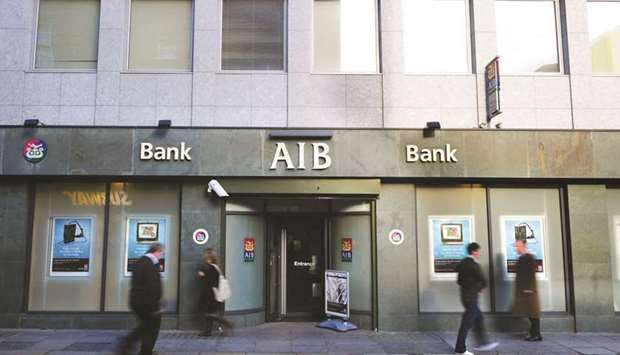
Shares in the bank will be sold for between €3.90 and €4.90 each in the initial public offering, the country’s finance ministry said in an emailed statement. The price will be finalised around June 23, with shares trading unconditionally in London and Dublin June 27.
The sale of a quarter of the government’s holding in the firm is the latest step in the rehabilitation of AIB since its near collapse during the financial crisis. The state spent €21bn saving the company, which helped push the nation into an international rescue programme. The bank, the biggest player in the Irish mortgage market, is viewed as a proxy for the economy, which is growing at about twice the pace of the euro-region.
“AIB is well positioned to sustain earnings at a €1.2bn run rate in the medium term,” Darren McKinley, an analyst with Merrion Capital in Dublin, said in a note. “We are very comfortable that AIB is well positioned to grow and of relatively low risk to investors.”
The stock may eventually price at about €4.50 a share, raising around €3bn, according to a person familiar with the process, though the final figure will be determined by demand. That would equate to about 0.9 times book value.
The formal IPO price range would give AIB a market capitalisation of €10.6bn to €13.3bn. The sale may raise as much as €3.8bn including an over-allotment option.
A rump of AIB shares which still trade on the Irish Stock Exchange are not seen as a realistic indicator of the bank’s value because they are so thinly traded. The shares fell as much as 29% on Tuesday and were down 18% to €5.30 in Dublin.
“I am encouraged by the strong level of interest shown by investors,” outgoing Finance Minister Michael Noonan said. “A successful transaction would represent an important milestone in our journey to dispose of our banking investments and ultimately recover all the money the Irish state has invested in AIB.”
The decision to proceed comes after bankers advising on the sale assessed whether the indecisive UK election result would impact the price of the shares. Among the risks flagged by AIB on Monday include uncertainty stemming from the Brexit vote.
Other risks mentioned in AIB’s prospectus include further possible measures by the government to lower standard variable interest rates, while caps on executive pay may hurt the bank’s ability to retain staff. The bank also highlights its high exposure to the Irish real estate market, which helped push it to the brink of collapse during the crisis.
The government hired Bank of America Corp, Deutsche Bank AG and Dublin-based Davy as global coordinators for the sale. Morgan Stanley and Goodbody Stockbrokers are working with AIB.
Goldman Sachs Group Inc, Citigroup Inc, UBS Group AG, JPMorgan Chase & Co and Goodbody are bookrunners on the deal, with Investec Plc as a co-lead manager. Fees for the advisers are as much as 16mn euros, according to the prospectus.