


Campisabalos is a tiny, quaint village two hours north of Madrid. Until this year, most people had probably never heard of it.
But that changed when the World Health Organization placed Campisabalos at number three on its list of municipalities with the best air quality in the world.
“Sometimes I think we should charge a rate of a few cents for every breath taken in our town,” jokes the village mayor, Pedro Jose Maria de Pablo.
The village has a population of barely 70. That goes down to 30 when the “rough” winter season sets in, De Pablo adds.
It is probably this extremely low population density – about 1.3 inhabitants per square kilometre – that makes the air so pure in Campisabalos, in addition to the altitude of over 1,300 metres.
Only Finnish village Muonio, located above the Arctic Circle, and Canadian town Norman Wells were rated higher in terms of air quality. The WHO report gathered data from nearly 800 municipalities in 67 countries, focusing on fine suspended particles.
When assessing air quality, the WHO measures two types of fine suspended particles, known as PM10 and PM2.5. These particles, which include sulphates and nitrates, can penetrate deep into the lungs and cardiovascular system, causing serious health problems.
For air to be considered safe, it must have less than 20 micrograms per square metre of PM10 and less than 10 micrograms per square metre of PM2.5. Average yearly rates in Campisabalos turned out to be much lower: six micrograms of PM10 and five micrograms of PM2.5.
“The dominant winds here come from the northwest, from a region with barely any factories or large cities. So they have swept over a large area without becoming contaminated,” says De Pablo, a retired physics expert who worked for many years in the air quality department at the Environment Ministry.
The air quality in Campisabalos has attracted interest from around the world. “Lots of television networks have come here because of the air thing,” says a man who wishes to be known as Severino. He is sitting on a bench in front of a pretty Roman church, waiting for the local butcher to arrive.
Campisabalos is such a small village that it lacks supermarkets and shops. Traders from larger villages come in vans to sell their goods.
“I see that people come here to tour our village, to breathe,” says bricklayer Antonio, sitting in a bar adorned with a small collection of artefacts of local archaeological and historical interest. He says he recently met a couple who had travelled all the way from Palma de Mallorca just to breathe the air in Campisabalos.
“In Madrid, you can see how it is covered by a layer of pollution [...] and that hits hard,” says Antonio, one of the few residents of Campisabalos who is not retired.
“That is the sad part of living here,” says mayor De Pablo. “People are getting older and older and the town is dying out.” Many people do return during the holidays, though – especially in spring and summer.
“When it is boiling hot in the capital, we still need to use a light blanket at night,” adds De Pablo, who has been town mayor three times.
The pollution-free winds that make the summer days so fresh are also the reason the village has a wind park with 37 turbines, a small source of income.
But the winter months are too bitter for most. “People here are strong, they work hard and are frugal,” De Pablo says. They are also hardy, and live for a long time. De Pablo’s own mother is 102. “She only comes here in the summer now, but she is doing fine, she can still think straight,” he says.
Could the longevity of the residents be down to the air quality? “People are resilient, because of the good air or who knows why,” De Pablo remarks. However, he also adds that in earlier decades it was a fact that many children died young.
“It’s the old people who don’t die here,” he jokes, explaining that Campisabalos has no permanent physician and a doctor comes just once a week from the next town. “It’s as if they have a shell that protects them.” – DPA
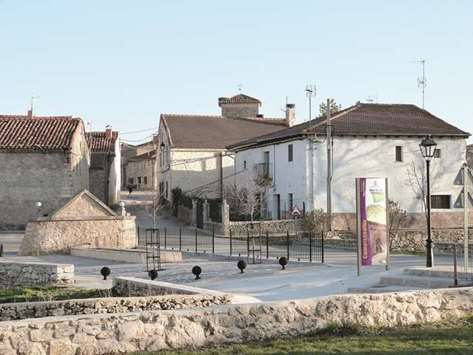
Campisabalos, a tiny village north of Madrid, has the third best metropolitan air quality in the world.