


“Sorry you’re such a hateful person Beth” and “you donkey witch” are just some of the unusual messages that can be read in colourful lettering on Kat Thek’s cakes.
The New Yorker came up with her Troll Cakes Bakery and Detective Agency as an answer to people who harass others online.
People who receive nasty online comments can send a screengrab of the insult to Thek, together with the troll’s address, and she ices it onto a chocolate cake together with sprinkles, edible flowers and butterflies and posts it to the offender.
“Cakes are often part of celebrations like birthdays and weddings. Decorating them with horrible comments transforms anger into pleasure,” the California-born 30-year-old says.
One cake costs 35 dollars and can be posted to the person’s home or work address. If a customer doesn’t know the offender’s address, Thek herself will track it down for 60 dollars.
A month after she launched Troll Cakes, baking in the evenings and on weekends around her full-time job as a copywriter, she has already sent around 50 cakes, and orders are increasing.
Her other bizarre projects include selling pills made out of cat hair, making bouquets out of objects other than flowers, and fortune-telling with used wax strips.
One of the recipients of her troll cakes is the resident of possibly the most famous address in the United States: the White House, 1,600 Pennsylvania Avenue, Washington DC.
“Anyone who uses the Internet is now familiar with online harassment,” says Thek. “Above all that’s thanks to Donald Trump, because our president trolls people like Rosie O’Donnell.”
Trump is well known for attacking and insulting O’Donnell, an actress and TV presenter. Indeed, the president regularly launches Twitter tirades against Democrats, department stores, celebrities, television shows and the media.
And despite ever increasing criticism of his social media use, the only reply the White House has made is “the president’s tweets speak for themselves.”
Thek offers a “Tiny Hands Special” – a reference to Trump’s famous sensitivity to being told his hands are unusually small – allowing the customer to choose their favourite Trump tweet and have it posted on a cake to the White House.
So far she has had four orders for the special, though a White House spokeswoman says the president has not received any of them.
During the election campaign, Melania Trump said that she would make online bullying a focal point of her work as first lady.
Since the election however, she has made no further mention of it – just as well, perhaps, as her work would run the risk of being constantly undermined by her husband.
But online harassment is an everyday problem. Almost half of all Internet users in the US have experienced it at some point, according to a study by New York-based research centre Data and Society.
Sameer Hinduja, a professor of criminology at Florida Atlantic University and co-director of the Cyberbullying Research Centre, is rather sceptical about Thek’s bakery however.
“It’s incomprehensible to me that somebody would do something like that,” he says. “Why would a victim of bullying spend money on it? Cake is delicious, it’s like celebrating bullying.”
Many online trolls think they can hide their real identities behind pseudonyms, says Hinduja. “But you also see a lot of hate on social networks like Facebook where trolls use their real names and identities. It’s a disgrace that some people take pleasure in being nasty to others.”
Currently Thek only delivers within the US but she says that if Marine Le Pen had won the French election she would have considered opening a bakery in France.
And she’s also keeping an eye on Germany’s polls. “If anybody like Trump came to power in Germany, there would be German troll cakes too,” she says. -DPA
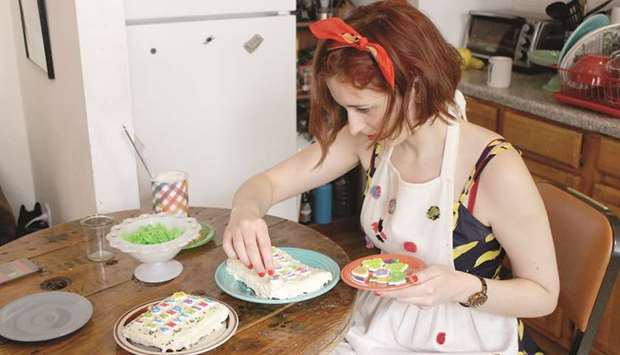
Anyone who has received a nasty insult online can send a screengrab to Kat Thek and her Troll Cakes Bakery and Detective Agency and she will track down the bully and send them a cake with their hateful comments iced onto it.