


The innovations in learning science and technology that are driving changes in medical education were explained at the latest instalment of WCM-Q’s Grand Rounds.
Visiting expert, Dr Rishi Desai, clinical instructor at Stanford University, said that the digital age has ushered in fundamental changes in the way medical students learn their craft, giving rise to exciting new developments in pedagogical science.
Dr Desai said that students have become highly adept at using a wide variety of learning resources in a complementary manner, assimilating information from online videos, traditional and online textbooks and journals, and blogs where fellow students share experiences, among other sources. The largely independent nature of this learning means students are less dependent on traditional learning experiences, like lectures, meaning colleges must adapt their programmes to maximise learning outcomes.
“At many medical colleges it is very common that attendance at lectures is as low as 15 or 20%, because it is simply not a good use of a student’s time to travel halfway across the city to obtain information they can find online quickly, easily and from high-quality sources.
“What it means is that colleges have an opportunity to use technology to make information acquisition far more efficient, leaving them time to focus on other core learning goals such as skills acquisition, critical thinking, group work, professionalism training, cultural competence and patient-doctor interactions.”
Dr Desai said that learning science research indicates that medical colleges should be investing in hi-tech simulation centres to help students gain important practical skills, maximising access to quality online resources, encouraging students to be open to new technologies, and introducing students to clinical learning experiences very early in the curriculum. All of these elements have been incorporated into WCM-Q’s new curriculum, which was launched in 2016.
“The students of today will still be practising in 30 to 40 years’ time so it is crucial that we prepare them to adapt to changes so they can continue to provide the best possible care for their patients,” he added.
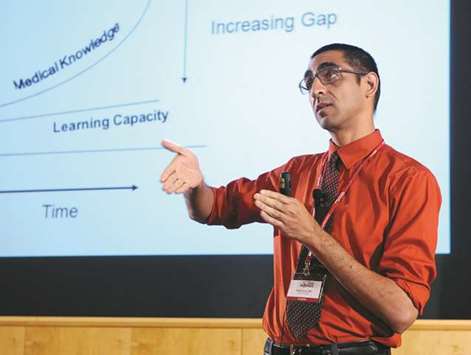
Dr Rishi Desai