


The UK government sold its last remaining shares in Lloyds Banking Group, bringing Britain’s biggest mortgage lender back into full private ownership almost a decade after it was bailed out in the depths of the financial crisis.
The Treasury made a profit of £894mn ($1.2bn) on its original £20.3bn-investment after disposing of its final 0.25% in the bank over recent days, Lloyds said in a statement yesterday. The London-based lender said the sale marked the final step in its turnaround, although more work is required.
The bank’s return to full independence follows efforts by chief executive officer Antonio Horta-Osorio to restore the lender’s profitability and financial strength and is a symbolic moment for Prime Minister Theresa May as she pushes to win a bigger mandate from British voters next month. Still, the UK still owns more than 70% of Royal Bank of Scotland Group and will probably make a loss on its stake on that lender when it’s divested.
“There’s always more to do and we have lots of plans for the future,” Horta-Osorio said in an interview on Bloomberg TV. The CEO said he’s “very happy at Lloyds, very committed to the bank” and will start preparing a fresh strategy in July to be presented to investors at the beginning of next year.
Lloyds was up 2.2% at 71.70 pence at 10:15am in London, bringing the increase for the year to about 15%.
The government, which at one point owned 43% of the bank, has gradually sold shares to investors through a trading program run by Morgan Stanley announced in December 2014. BlackRock, the world’s largest asset manager, replaced the government as Lloyds’s biggest investor in January.
“It has been a long road since the government made its £20.3bn ‘investment,”’ Ian Gordon, an analyst at Investec Bank Plc, said in a note to investors this week. “The removal of a technical drag from the sale of up to 15% of the average daily volume is positive,” he said, referring to shares that had been sold under the trading plan.
Although the government ultimately made a profit, including £400mn from dividend payments, the funds used for the capital injection in 2009 could have been deployed elsewhere.
The UK had little option but to rescue the lender, which needed most of the bailout because of its government-assisted takeover of HBOS. Six years since the depths of the credit crisis, when the bank was reliant on short-term wholesale market funding and had more than £200bn of toxic assets, the lender now has zero net debt, according to Horta-Osorio.
“Taxpayers’ money was used as it was a major crisis, but taxpayers’ money should not be used to bail out banks. The government did well in selling their shares,” he said.
Lloyds is growing net profits as charges for past misconduct abate. Horta-Osorio’s help in returning the bank to full private-ownership didn’t come without bumps in the road. He was the first UK banking leader to begin offering compensation to customers who were wrongly sold payment protection insurance, resulting in more than £17bn of charges for the bank.
Although the CEO said that exiting the government stake is a “big milestone,” he added that he must now complete the acquisition of the MBNA credit card business Lloyds agreed to buy from Bank of America Corp at the end of last year; deliver the synergies he promised from the deal; and invest in technology across the bank to boost profitability.
Attention at Lloyds will now turn to succession planning for the eventual departure of Horta-Osorio, one of the longest-serving bank CEOs in Europe. Although he reiterated that he’s happy at the bank, there has been persistent speculation over his future at Lloyds as the bank prepares a fresh three-year strategy.
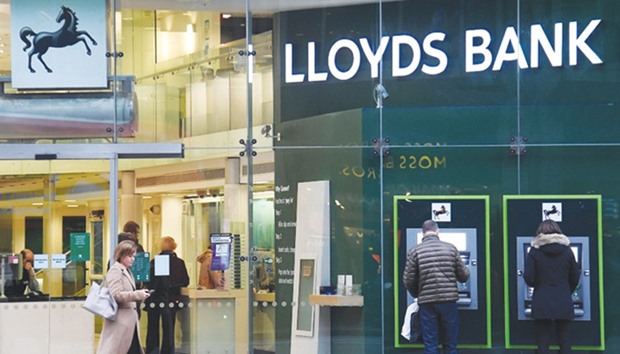
Customers use ATMs at a branch of Lloyds Bank in London. The Treasury made a profit of u00a3894mn ($1.2bn) on its original u00a320.3bn-investment after disposing of its final 0.25% in Lloyds over recent days, the bank said in a statement yesterday.