


With London mayor Sadiq Khan and his Parisian counterpart Anne Hidalgo cracking down on vehicle emissions this spring in the global push for clean air, it should be a boom time for platinum which is used in catalytic converters.
But it is not likely to translate into higher demand for the metal.
A greater focus on cutting emissions of smog-forming nitrogen oxide (NOx) from diesel car exhausts is driving a switch to treatment systems that use less platinum.
London and Paris are part of the C40 Cities initiative, which links cities working to improve air quality.
It aims to produce a register of the most-polluting cars by the end of 2017 to encourage buyers to choose greener vehicles.
In the past the effort to cut emissions in Europe has focused largely on reducing carbon dioxide, but the C40 pact also specifically highlights NOx output.
It coincides with the launch of real driving emissions (RDE) tests later this year, which will also tighten the focus on NOx.
“The bigger challenge for us is not keeping the typical emissions under the limit, the challenge is in terms of NOx and particulate emissions,” Volkswagen’s technology spokesman said.
“There isn’t a link between platinum and palladium (consumption) and those emissions,” he said.
Basic catalytic converters use platinum and palladium to produce a chemical reaction that processes polluting gases like carbon monoxide to render them safe.
Other after-treatment systems are needed to cut NOx, chiefly using lean NOx trap (LNT) or selective catalytic reduction (SCR) systems.
Real-world testing will push more manufacturers towards using SCR, according to leading catalyst manufacturer Johnson Matthey.
Those use some 20% less platinum than LNT.
NOx was put in the spotlight by the 2015 Volkswagen emissions scandal, which showed real-world emissions of NOx from diesel engines were much higher than thought.
PSA Group, which owns the Peugeot and Citroen brands, says it has implemented SCR-based systems across the board.”SCR technology is recognised as the most effective system for reducing NOx emissions,” it said.
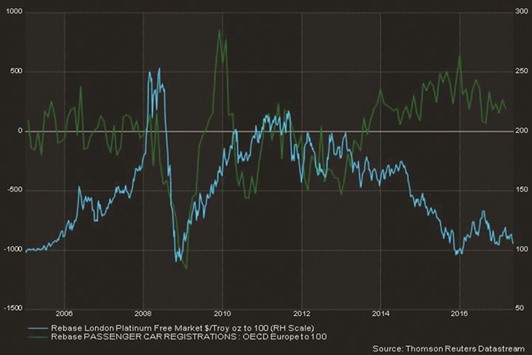
As more carmakers follow suit, demand for the metal is likely to fall this year, Johnson Matthey says, pushing platinum into its first market surplus in six years, reaching 300,000 ounces from a 202,000 ounces deficit last year.
That is even before factoring in the impact of the gradual dwindling of diesel vehicle market share on platinum demand.
Platinum is much more heavily used in diesel autocatalysts favoured in the European car market, with heavier loadings of palladium seen in gasoline catalysts.
.