


A senior detective fighting knife crime in London warned police are engaged in the “business of murder suppression” as they battle to contain the rise in the number of stabbings.
Detective chief superintendent Michael Gallagher said the knife crime issue had become broader than simply gangs and postcodes, saying that in some cases: “We are talking about almost random assaults.”
He added: “We are in the business of murder suppression, protecting young people and preventing them from killing each other.”
However, he spoke of a new “mobilisation” of Londoners and communities shocked by the latest round of 11 knife murders in less than a fortnight — with more people coming forward to tell police about what was happening and who was carrying blades.
Gallagher, head of the Operation Sceptre knife crime taskforce, spoke to the Standard after the two-week spate of murders and a 24% rise in knife offences in London last year.
Among the victims was Mahamed Hassan, 17, killed by masked youths as he cycled home from a party in Battersea, and Elijah Dornelly, 17, stabbed to death in Walthamstow after attending an anti-knife crime rally.
Gallagher said: “It is absolutely tragic what is going on here. But I am also encouraged — I think we are at a point where Londoners are feeling we have got to mobilise to do something about this issue. We have had massive amounts of contact with communities. The public are giving us a much clearer picture of where cops should be operating from a geographical perspective and also, crucially, individuals that we should be working against.”
He said officers had seized a record 300 knives in seven days of action last week, partly as a result of people telling them where to look.
Sceptre is being expanded, with operations being run by borough-based officers instead of the Trident gangs command.
The change has been prompted by statistics that show only a quarter of knife carriers are now linked to gangs. Police believe more young people are now carrying knives for differing reasons, including status, criminality and increasingly for self-protection.
There is also growing awareness of how the nature of the threat changes in different areas. In Croydon knife attacks are often linked to teenagers gathering at transport hubs at the end of the school day — but in Lambeth more assaults are linked to the night-time economy and offenders are older.
Senior officers have held talks with officials from YouTube and Google about gangs taunting each other in videos on social media, though police accept this is an international issue. Police are also collecting data on how young people’s behaviour is affected by issues such as family break-ups, mental health and drug-taking.
The Met is engaged in educational measures delivered at schools — the first visits by community officers start when children are five — and it is encouraging role models to engage young men with an anti-violence message.
Gallagher said interviews with young people had also revealed there is a need for more black role models in society, in particular in politics and policing.
The violence has led to calls for more police action, including from families of victims who have urged the Met to increase stop-and-search activity.
In response, the Met has launched a full-time 100-strong taskforce to tackle outbreaks of violence across the city, and now runs week-long blitzes against knife crime each month, instead of just twice a year.
Gallagher said: “We are upping the tempo because the public wants us to.” The tactics will continue “until we absolutely turn the tide”.
Activities include weapon sweeps to find blades hidden by gangs, and focusing on those known to be habitual knife carriers. A cohort of suspects — thought to number several hundred — are targeted with the “Achilles Heel” or “Al Capone” approach — looking for any way possible to prosecute them.
“It is about finding their weak spot and exploiting it,” said Gallagher. “That could be for road traffic offences, an outstanding warrant, anything at all.”
The disruptive tactics are also intended to make suspects toxic to be associated with, so other gang members or criminals will shun them.
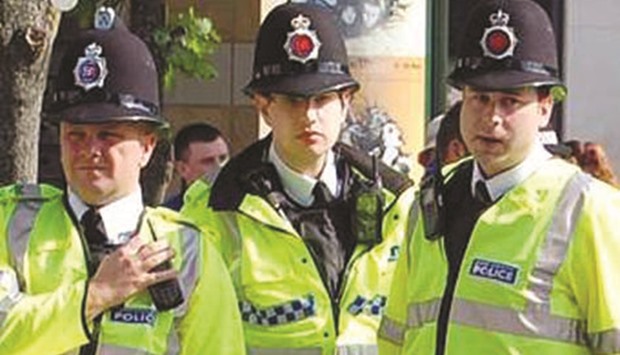
Police