


Nicola Sturgeon has said Scotland may not rejoin the European Union if she wins a second independence referendum but could instead apply to join the European free trade area. Even though most Scottish voters oppose a referendum before Brexit, the first minister has insisted another vote on independence is needed because Scotland has been taken out of the EU “against its will” after 62% of Scots voted to remain.
Sturgeon has now indicated she may not seek immediate reentry to the EU after independence after all, confirming speculation she could instead propose Scotland takes the “Norway option” by joining the Efta free trade area instead.
Sturgeon also indicated that even if she chose to recommend Scotland immediately seeks membership of the EU, it could be forced to reapply from scratch after independence and after the UK leaves the EU.
In her reference to Scotland “regaining” membership, Sturgeon confirmed previous hints she accepts she may have to retreat from her preferred timescale of staging a referendum between autumn 2018 and spring 2019, before Brexit takes place.
Asked by Andrew Marr on BBC1 on Sunday whether joining Efta would be an acceptable compromise, Sturgeon said a “phased approach” to rejoining the EU may be needed.
“My position is I want Scotland to be in the EU. Now we have to set out if we’re in an independence referendum, and we’re not in that right now, the process for regaining or retaining, depending where we are in the Brexit process, EU membership.
“Now it may be that we have a phased approach to that by necessity.”
Asked by Marr to confirm that meant joining Efta first and then seeking EU membership later, Sturgeon replied: “Well, it may be by necessity but we don’t want that. We have to set that out at the time because there are still some uncertainties, many uncertainties, around the Brexit process.”
Despite implying a delay in EU membership could be forced on her by the terms of the UK’s Brexit deal, Sturgeon’s problems with her Europe strategy are chiefly domestic. The European commission has also made clear Scotland can only apply to join once it is independent. About a third of SNP supporters voted to leave the EU last June, and some would oppose independence if it meant rejoining. Sturgeon would also face vehement opposition from the vocal Scottish fishing industry, which opposes rejoining the common fisheries policy (CFP).
In a clear hint she is leaving her options open on EU membership, she has repeatedly stressed that her main goal is to rejoin the single market. That would be achieved if Scotland joined Efta instead, allowing Scotland to also remain outside the CFP.
Sturgeon has tried to downplay the referendum question during the general election campaign, insisting that last year’s victory in the Holyrood elections gave her party the mandate she needs to call for a second independence vote.
.
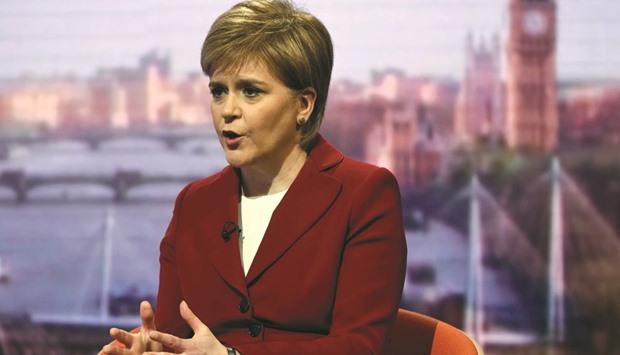
Scotland’s First Minister Nicola Sturgeon speaks on the BBC’s Andrew Marr Show in London, May 14, 2017