


Flamboyant businessman Vijay Mallya, pursued by Indian authorities over unpaid loans tied to his defunct Kingfisher Airlines, was arrested in London yesterday and appeared in court for an extradition hearing.
A source close to Mallya said he attended a police station voluntarily and the arrest was a technical procedure.
Mallya, 61, was arrested on behalf of the Indian authorities over accusations of fraud and appeared in Westminster Magistrates’ Court, British police said.
Indian television channels said he was granted bail at the hearing.
Mallya, in a message on Twitter, called the news of his arrest “usual Indian media hype”.
India had asked Britain to extradite Mallya to face trial after the liquor and aviation tycoon fled there last March after banks sued to recover about Rs90bn ($1.4bn) that Indian authorities say Kingfisher owes.
Mallya has repeatedly dismissed the charges against him and defended himself in messages on Twitter.
On January 28 he said that “not one rupee was misused”.
A spokesman for India’s foreign ministry said “the two governments are in touch” over India’s extradition request.
India and Britain have a mixed record on extradition, say legal experts.
Some cases have collapsed when evidence fell short of the standard of “dual criminality”, or actions that amount to a crime in both countries.
“The court usually focuses on whether there is sufficient evidence of criminality to extradite someone,” said Andrew Smith, a partner at London
law firm Corker Binning.
“India needs to show a prima facie evidential case against this man.”
CNN News18 channel said a team of Indian law enforcement officials would visit London to begin work on the extradition.
The Central Bureau of Investigation did not immediately comment.
Minister of State for Finance Santosh Gangwar said the government would do everything in its power to bring Mallya to justice.
“We will not spare anyone who is within the ambit of law. Criminals will not be spared,” Gangwar told reporters in New Delhi after the arrest.
“We will definitely work to bring him back to the country.”
India’s top brewer, United Breweries, part-owned by global giant Heineken, this year asked Mallya, its non-executive chairman, to step down from the board, following a regulatory order.
United Breweries was not immediately available to comment after yesterday’s development.
India’s capital markets regulator has barred Mallya from participating in the securities market for having allegedly diverted funds from whisky maker United Spirits.
A court in January ordered a consortium of banks to start the process of recovering loans from the tycoon.
Mallya was once known as the “King of Good Times” but dropped off India’s most wealthy list in 2014, engulfed by the massive debts of his grounded carrier.
His huge debt has come to symbolise the problems which bad loans pose to Indian banks and to overall financial stability in Asia’s third-largest economy.
Critics say the government has not done enough to tackle the issue of wealthy individuals such as Mallya, who obtain huge loans which they later fail to repay.
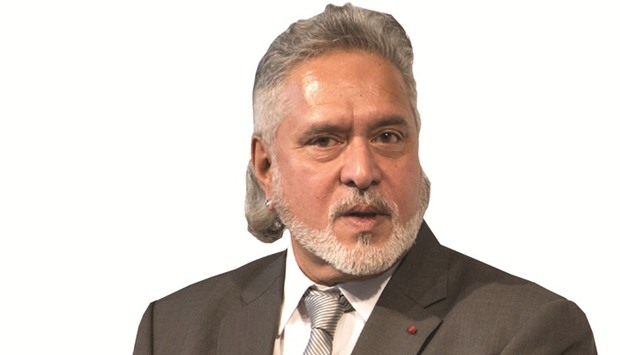
Mallya