


Being in the hottest part of the investment universe doesn’t necessarily pay.
Exchange-traded funds, or ETFs, based in Europe have doubled assets in the past five years to €550bn ($584bn), though the market remains so fragmented that less than a third of them are big enough to make money for the manager, based on figures from US company Vanguard Group.
The proliferation of ETFs means it will be a case of survival of the fittest as Europe catches up with the US, where the average size of a fund is about $1.4bn compared with $260mn across the Atlantic. Managers are putting up with losses today because of the potential rewards if they attract money from new clients or rivals unable to compete.
“You are not going to be profitable unless you have massive scale,” said Paul Stratford, an executive director responsible for asset management at accounting firm EY in Edinburgh. “The players in that space are in for the long game. Competitors who are unable to make money will exit the market.”
ETFs allow customers to own entire baskets of stocks and bonds in a single security. Their popularity has soared along with other so-called passive investments because they’re typically cheaper than traditional mutual funds in a world of record-low interest rates and suppressed returns. Their assets have grown to more than $4tn globally since the original ETF, State Street Corp’s SPDR, started in 1993.
In Europe, there are about 2,200 of the funds, more than 1,500 of which have less than $100mn, the threshold at which they typically start to make money, according to Andreas Zingg, head of distribution at Vanguard’s ETF business for continental Europe. At Vanguard, which has about 4% of the European market, a third of its 18 funds have less than that. They are among the newest and cheapest offerings.
BlackRock, the world’s largest fund company, is the biggest seller of ETFs and controls almost half the market. A spokeswoman in London said nobody from BlackRock was available to comment or give details on the size of its funds.
Funds largely compete on price and need sufficient assets to generate the fees required to cover running costs. Niche funds, such as those linked to Shariah law, can charge higher fees and therefore be profitable with fewer assets, Zingg said from Zurich.
The smaller funds lack “all the great advantages of an ETF — cost efficiency and liquidity,” said Zingg, whose company oversees $4tn globally.
A typical fee for an ETF is about 30 basis points in Europe, or 0.3%, less than half the 75 basis points for an actively managed mutual fund, according to data from Vanguard.
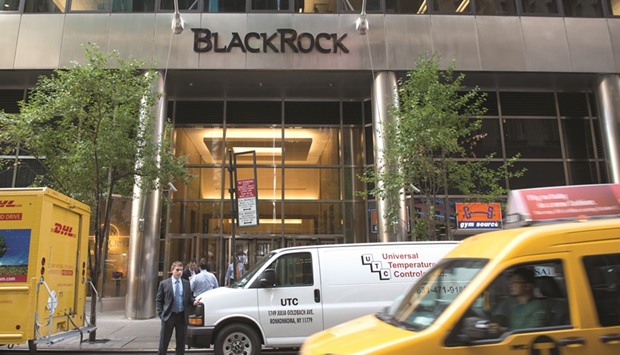
The BlackRock logo is displayed at the company’s offices in New York. BlackRock, the world’s largest fund company, is the biggest seller of ETFs and controls almost half the market.