


Indian Prime Minister Narendra Modi’s ambitious plans to spend a record $60bn on India’s infrastructure this fiscal year may provide a much-needed boost to the rupee loan market after project-finance volumes slumped last year.
Bank loan commitments for project financing may potentially double to Rs2tn ($31bn) this financial year, according to Muhund Kannappan, a credit trading director at Deutsche Bank in Mumbai. Rupee-denominated project finance and capex loans fell 28% last year to Rs1tn as infrastructure projects were slow to take off, according to Bloomberg-compiled data.
An upturn in borrowing as Modi builds and improves roads, airports, electricity and rail networks could boost rupee loan volumes to the most since the year ended March 2011, when Asia’s third-biggest economy expanded almost 9%. India has forecast growth of as much as 7.5% this fiscal year, according to the government’s economic survey. Foreign-currency loans for project funding stood at $4.66bn last year.
Power Grid Corp, India’s biggest power transmission company, plans to raise as much as Rs170bn of debt this financial year to fund its capex plans of Rs230bn, finance director K Sreekant said in an interview in February.
“The key factor will be whether the government will be able to spend the entire budgetary allocation in the finite period of the next 12 months,” Deutsche Bank’s Kannappan said. “If the private sector capex cycle picks up, availability of overseas funds to finance the capex is not an issue.”
The government is trying to ramp up modernisation plans that include building 42 kilometres (26 miles) of roads a day, 43 new airports and spending $153bn on power plants over five years. Bureaucracy in the national road-building authority, which is responsible for implementing the highway-development programme, has often delayed decisions on several key projects, Transport Minister Nitin Gadkari said in November.
“Bank funding for infrastructure will increase as government participation via private-public partnerships will be a boost for new projects taking off,” Rajesh Mokashi, managing director at CARE Ratings Ltd, said in a phone interview.
Infrastructure projects on the drawing board include a second international airport and a trans-harbour highway link for the financial hub Mumbai, a national rail freight corridor and adding about 188 gigawatts of power generation capacity in the five-year period through March 2022.
Japan International Cooperation Agency signed an accord with Mumbai Metropolitan Region Development Authority last month to provide an Rs86bn loan for the trans-harbour link project.
“Government spending will provide an impetus for banks’ lending activity for infrastructure projects,” said Manmohan Singh, head of banking at the Indian unit of Bank of Nova Scotia in Mumbai. “We will see an uptick in rupee project-finance lending, which is easier for companies than foreign-currency loans.”
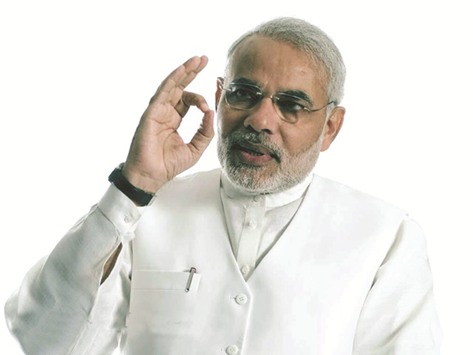
Modi: To spend a record $60bn on India’s infrastructure this fiscal year.