


Saima Wazed Hossain, chairperson of Bangladesh National Advisory Committee for Autism and Neurodevelopmental Disorders, and daughter of Prime Minister Sheikh Hasina, has been designated as WHO Champion for Autism in South East Asia region.
WHO regional office for South East Asia, located in New Delhi, made the announcement yesterday on the occasion of World Autism Day observed worldwide on April 2 every year.
The UN agency said, as WHO Champion, she will be supporting its advocacy with 11 member-countries of the region for inclusion of the issue in national policies and strategies.
This is to promote WHO’s mental health initiatives and strengthen research and evidence of autism spectrum disorder (ASD) for more focused interventions to address the suffering of children with the disorder, as well as their
parents and caregivers.
“Saima (Wazed) Hossain’s dedicated and unprecedented efforts have put autism high on the health agenda in her country Bangladesh, and helped get substantial regional and global attention to autism spectrum disorder and other mental and neurodevelopmental disorders,” WHO regional director Dr Poonam Khetrapal Singh said.
“Her support as Regional Champion is expected to garner momentum for awareness and action in member countries, as much remains to be done for autism in across the region,” she said.
She hoped that Saima will play a vital role as a regional champion to garner momentum for awareness and action for autism across the region.
Mentioning that autism prevalence rates are estimated at 160 cases in a population of 10,000 or one in 62 children, Dr Khetrapal Singh also said that in the low and middle-income countries, children with ASD don’t get medical attention and necessary care.
“Their life is a struggle, often marred by stigma, marginalisation and discrimination. Autism continues to be a public health challenge which needs to be addressed with more
focused efforts,” she added.
WHO has been advocating for political commitment to the needs and services for ASD, scaling up resources and raising public awareness to facilitate early detection, community-based intervention and multisectoral approach to reduce the impact of ASD.
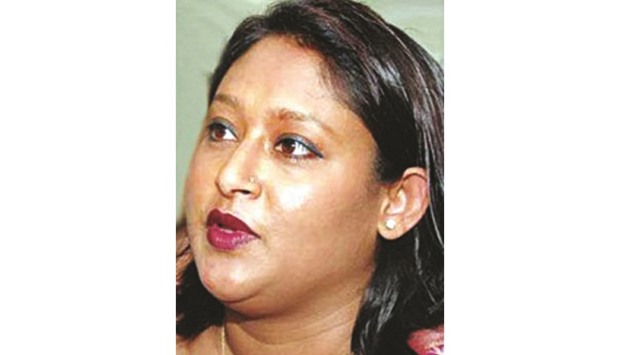
Saima Hossain