


Russia’s biggest exchange operator offered companies direct access to its foreign-currency market two months ago. But it has yet to lure any takers.
The Moscow Exchange spooked banks and currency brokers with the January 16 launch of the service, which allows firms to save on currency-conversion fees and other costs by cutting out middlemen dealers. While the bourse says several companies have taken some initial steps, no one’s actually using it yet.
The slow start may be a relief to banks fearing for commissions, but pose a challenge to the Moscow Exchange’s goal to carve out a bigger slice of the $5.1tn-a-day currency market. Some firms are balking at the collateral requirements – they must have capital of at least 50bn roubles ($880mn) for access in some cases.
And bigger companies say the potential cost savings aren’t enough to justify bulking up their own trading systems.
“It’s not a fact that for companies it’s cheaper to access the market directly,” said Pavel Goltsblat, head of sales at broker ITinvest in Moscow. “They need to hire a trader, build infrastructure, while they could keep their broker or bank with a very small commission of one, two basis points.”
The majority of worldwide currency trading is unregulated and handled over the counter, not on exchanges. This makes the Russian exchange unique. The bourse says it aims to boost daily trading by about $1bn over several years.
While the change could boost the Moscow Exchange’s revenues, it might also raise the cost of other banking products, since lenders will be looking for ways to compensate for the loss of commissions from conducting foreign-currency and money-market operations.
“It doesn’t make sense for major Russian companies to directly access the market because they take on market risks while reducing costs only marginally,” said Oleg Popov, a money manager who oversees $300mn of assets at April Capital in Moscow. “Since foreign-currency conversions are a significant part of corporate banking profits, lenders will be forced to raise their fees on other products, or cut costs.”
The central bank has been loosening its grip on Russian markets since dropping the rouble’s peg to the dollar in November 2014.
In the second quarter, the Moscow Exchange will allow firms to get direct access to the money market, which will offer both cost savings and access to deposit rates that are close to those of the central bank, Sergey Shvetsov, the first deputy governor of the Bank of Russia, said on March 13.
Foreign-currency transactions account for about 10% of the banking industry’s profits, the central bank said in an e-mailed response to questions. Even if all the larger companies switch to direct access, small and mid-sized companies will continue using lenders’ services, it said.
The move shows market watchdog Bank of Russia is withdrawing its scrutiny of the market, a “concerning” development in the event of major volatility, says Popov.
Still, Goltsblat said direct access can have its benefits. “Major foreign-currency market players become self- sufficient because they seek confidentiality, since brokers can’t always guarantee it with really big transactions,” he said.
Here are comments from some of Russia’s biggest companies on direct market access:
Mobile TeleSystems, Russia’s largest wireless carrier:
The collateral requirement “significantly limits” the number of Russian firms that can gain direct access to the foreign-currency market. Still, the company says it sees a potential cost-saving opportunity in the exchange’s endeavour.
MMC Norilsk Nickel, which vies with Vale as the world’s biggest nickel producer:
Nornickel says it doesn’t want to be one of the pioneers of direct market access, and will only start trading foreign currency directly if the experience of other major exporters is “positive” and after getting all the necessary approvals from the central bank.
Severstal, Russia’s biggest steelmaker by market value:
Severstal is currently conducting foreign-currency transactions through banks and is considering using the direct market access option in the future. At the same time, Severstal says this instrument makes more sense for those companies that constantly convert foreign currency via small transactions.
Sibur Holding, Russia’s largest petrochemical producer:
Direct access to foreign-currency conversion is potentially interesting for Sibur in terms of expanding the scope of financial instruments used for currency exchange and reducing the cost of treasury operations. Still, Sibur is in long-term partnerships with several banks that are “key” market participants.
The company will need to study the new opportunity “in more depth.”
Rosatom Corp, state-owned nuclear company:
For Rosatom’s smaller subsidiaries, direct-market access is “disadvantageous,” while bigger subsidiaries are weighing the speed of the deposit and withdrawal of cash from the trading system. If deposit and withdrawal of cash can be done in one day, that’s seen as “positive,” while if this process requires two days, this would be “really negative.”
Rosatom is also weighing the size of the security deposit, the exchange rate, and the size of the security guarantee of the parent holding, and plans to “cautiously test out” direct market access.
X5 Retail Group, billionaire Mikhail Fridman’s food retailer:
X5 is in an “active dialogue” with the Moscow Exchange about direct market access and the company plans to gain access to “all possible” instruments and use them depending on its needs and convenience.
Detsky Mir, Russia’s largest children’s goods retailer:
Detsky Mir isn’t interested in direct market access because most of its foreign currency comes from forward contracts and the rest from banks. The amount of the companies’ foreign- currency denominated supplies is “small” and scheduled “far in advance.”
Rolf Group, one of Russia’s largest auto dealers:
Rolf plans to use direct access to the Moscow Exchange’s foreign-currency market. The company conducts foreign-currency conversions one to five times a year in amounts of up to $15mn. Rolf also plans to expand direct use of money-market instruments.
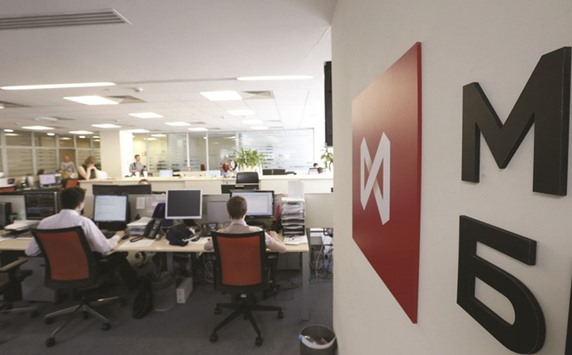
Employees work on the floor of the Moscow Exchange. Russia’s biggest exchange operator offered companies direct access to its foreign-currency market two months ago. But it has yet to lure any takers.