


Labour will oppose plans in the “great repeal bill” to give ministers sweeping powers to rewrite laws with minimal interference from parliament, Jeremy Corbyn has said.
The Labour leader was responding yesterday to reports that the government will publish a white paper setting out its plans for the bill on Thursday, a day after Theresa May starts the formal process of taking Britain out of the EU by triggering Article 50.
The white paper will set out how the government intends to repeal the 1972 European Communities Act and transplant laws that have force because of the UK’s membership of the EU into domestic law. It is expected that this will involve extensive use of “Henry VIII powers” – laws allowing ministers to change primary legislation (government bills) using secondary legislation (orders that go through parliament with little or no scrutiny).
Speaking on ITV’s Peston on Sunday, Corbyn said Labour would oppose handing ministers such extensive powers when the House of Commons votes on the great repeal bill. “We’re not going to sit there and hand over powers to this government to override parliament, override democracy and just set down a series of diktats on what’s going to happen in the future,” he said. “We’d be failing in our duty as democratically elected parliamentarians if we did that.”
Corbyn said the fact that the constitution allowed these sorts of powers to survive was “a wondrous thing”, but “they’ve got to stop”. “I don’t think the record of Henry VIII on promoting democracy, inclusion and participation was a very good one,” he said. “He was all about essentially dictatorial powers to bypass what was then a very limited parliamentary power.
“We need total accountability, at every stage of this whole Brexit negotiation.”
Ministers argue that they need the powers because leaving the EU will require a vast body of law to be rewritten and many of the changes that will be made to primary legislation using Henry VIII powers will be technical. Speaking on the BBC’s Sunday Politics, David Lidington, the leader of the Commons, cited as an example the need to change a bill to take out a reference to an EU body serving as a regulator and replace it with a reference to a UK regulator.
He said the Henry VIII powers granted in the great repeal bill would be “limited and defined”, and parliament itself would vote on what powers ministers should receive.
“The scope, the definition of those powers and when they can be used, in what circumstances, is something that parliament will have to approve in voting through the bill itself,” Lidington said.
The row erupted as the Sunday Times claimed that the department for exiting the European Union had drawn up a plan for EU nationals who are living in the UK to continue to receive the benefits they currently get after Brexit, including in cases where child benefit is paid for children living abroad.
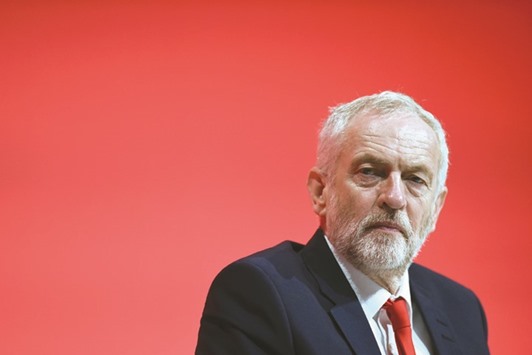
Corbyn: ‘We need total accountability’