


Pakistan conducted its last full population count in 1998. The exercise was not repeated until now because of violence carried out by militants linked to Al Qaeda.
Pakistan will today begin a first population census in almost two decades to collect demographic data on the sixth largest nation on earth.
But the exercise involving tens of thousands of officials and security forces risks exposing further ethnic divisions in a country already consumed by violence.
Pakistan conducted its last full population count, its fifth in total, in 1998 but the process could not be repeated until this year because of attacks carried out by militants linked to Al Qaeda.
“It is secure enough to go for it now,” census chief Asif Bajwa told DPA at his office in the capital Islamabad, where Pakistan Bureau of Statistics (PBS) staff are working overtime to run last-minute errands ahead of the count.
The last census was due in 2008 but the government kept delaying it because large swathes of territory in the north-western tribal regions were under the control of Taliban rebels.
In the south-western province of Balochistan, nationalist insurgents also turned regions under their control into “no-go” areas for Pakistani officials and security forces for several years.
But the military pushed back against both Islamist and ethnic rebels in a series of offensives launched in mid 2014, paving the way for the census to finally take place.
“It is going to be all over the country,” army spokesman Asif Ghafoor said. “No one will be left uncounted due to security fears.”
The preparations for what will be a mammoth undertaking seem both hectic and festive at the PBS offices.
Printing machines are churning out thousands of datasheets every day and more than 90,000 people have been trained across Pakistan to work as field staff.
National television channels are running advertisements informing people how the process works.
The country has been divided into 168,275 geographic units through satellite mapping and thousands of troops have been deployed for security, Information Minister Marriyum Aurangzeb said.
Pakistan’s estimated population is around 200mn, making it the sixth most populous country in the world behind China, India, United States, Indonesia and Brazil, census boss Bajwa said.
“The estimates are based on yearly surveys...and birth trends,” he added. “They are very authentic.”
But only a census can give a true picture and influence future government policy.
“The census is supposed to give Pakistan two things — one is the number and structure of population by sex and age. Second is the distribution,” said Professor Nancy Stiegler, a UN consultant working on the project.
Putting relevant resources in the right place is something the government can achieve using the information, the professor added.
“The data on age for example helps to determine whether to open hospitals or schools in a certain area.”
But there are also risks involved in conducting the census, especially in areas where people from different ethnic groups have been fighting violently for political influence.
Security Analyst Fida Khan said there are a couple of hotspots where “new demographic realities” may cause problems when the census results are announced.
One is the province of Balochistan where a new influx of Afghan refugees after the fall of the Taliban regime in Kabul might have changed the balance of ethnicities.
The second is the city of Karachi, with a estimated population of over 20mn.
An internal migration of Pashtuns to Karachi from the regions might have made existing local communities an ethnic minority.
“It can ignite a fresh wave of violence if the political influence of local people is challenged,” Khan said.
Karachi has been one of the most violent cities in the world in recent years with several hundred people killed in ethnic fighting.
“The census and its outcome in a multi-ethnic society is a delicate task...and the government must handle it delicately,” Khan concluded.
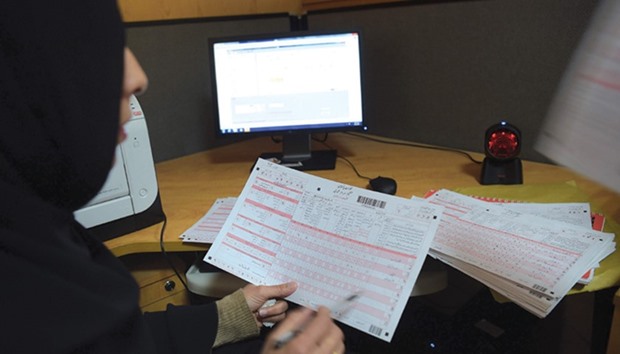
An employee of Pakistan Bureau of Statistics at the headquarters of Population Census 2017 checks a census data form in Islamabad .