


Close to 1mn people in drought-hit Sri Lanka are in “urgent need of food assistance” with tens of thousands needing “life-saving support”, according to an assessment by the government and the UN that has yet to be made public.
Sri Lanka has been dealing with its worst drought in decades over the past year, and people are reaching the breaking point.
In a situation report earlier this week, the Disaster Management Center referred to 1.2mn people “affected” by the drought.
In the assessment, the language is much stronger.
“Over 900,000 people are in urgent need of food assistance,” says the emergency assessment obtained by IRIN and dated March 7. Of those, about 80,000 people need “urgent life-saving support”.
The drought is affecting 23 of the island nation’s 25 districts, across all nine provinces.
Already, many families are being forced to “eat less preferred food, limit portion sizes, reduce number of meals per day,” according to the assessment, which was produced by the government’s disaster management and relief authorities in co-operation with UN agencies, including the World Food Programme and the Food and Agriculture Organization.
“Irreversible coping strategies such as taking children out of school and selling of livelihood assets could be further increased as a result of the exhausted nature of food consumption based coping strategies,” the report warns.
The assessment says every third household out of the affected population is struggling to access drinking water.
The government announced it began delivering drinking water to 180,000 families on March 2.
Intermittent rains are expected to arrive late this month or early April, followed by the monsoon.
Yet, they will not alleviate the problems faced by farmers who have lost their rice harvest to the drought.
“The biggest issue we have right now is the shortfall in the rice harvest,” Disaster Management Minister Anura Priyadarshana Yapa told IRIN.
“We are calculating the losses and importing stocks.”
He said the government is planning an assistance package for affected farmers but didn’t provide any further details.
The assessment says the government has also committed Rs8bn (about $52mn) for a “cash for work” programme.
According to the assessment, only 10% of farmers affected by the drought have produced seeds to sow for the next rice harvest, compared to more than 80% who are usually able to do so.
Debt has spiked among the affected population too, with more than 60% saying they owe more than $1,200.
“The government should consider to negotiate with the financial institution for the possibility of interest free extensions to settle the loans,” says the assessment.
The WFP said recently that this year’s harvest, which takes place this month and next, “could be the worst main agricultural season in the last 40 years.”
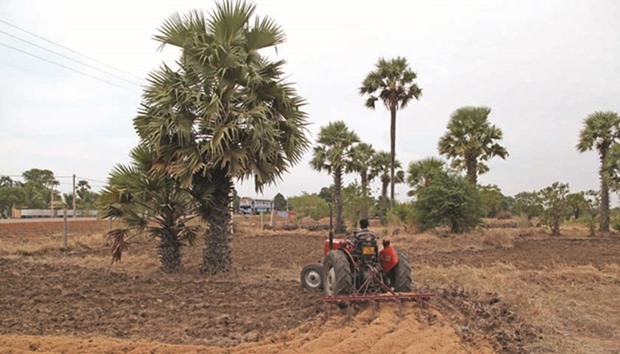
A farmer ploughs a field in Kilinochchi.