


The flip side of declines in the euro, yen and pound in recent months has been a massive increase in gold buying as investors in Asia and Europe try to protect their wealth.
The hunger for bullion is so strong that purchases of exchange-traded funds backed by gold last year eclipsed buying by the world’s central banks, the biggest holders of the metal, for the first time since at least 2010. So far in 2017, investors poured $3.1bn into the ETFs backed by precious metals, after a record inflow of $23bn last year. That’s helped boost gold prices 6.8% since the end of December, following the biggest annual gain in five years.
The European Union and countries including Japan and the UK are using low interest rates to spur economic growth, including demand for their exports that become cheaper as their currencies weaken. President Donald Trump has blamed the depreciations for the US trade deficit, and Joachim Fels, the global economic adviser at Pacific Investment Management Co, went so far as to suggest a “new currency cold war” by the world’s central banks.
“When you have a volatility in certain markets, a stable, safe place to go could be gold, which is almost a currency alternative,” said Lara Magnusen, a La Jolla, California-based portfolio manager for Altegris Advisors LLC, which oversees $2.37bn.
Billionaire investor Stan Druckenmiller, who sold all his gold in November, said he jumped back into the market in December and January. “I wanted to own some currency, and no country wants its currency to strengthen,” he said in a February 7 interview.
The Bank of Japan’s move in September to anchor the nation’s 10-year bond yields near zero “beautifully depreciated” the yen, Pimco’s Fels said in a December blog posting. The euro tumbled after the European Central Bank decided in December to increase the pool of bonds eligible for quantitative easing, including those with yields below its deposit rate of minus 0.4%, he said.
President Trump’s “America First” policy represents a fundamental change in the country’s dollar strategy, Hiroshi Watanabe, the former currency chief of Japan’s Ministry of Finance, said in January. The new government’s attempt to shrink the trade deficit could weaken the US currency, Watanabe said.
ETFs have become a steady source of gold demand as central banks slow their purchases. In China, the largest consumer of the metal, the central bank halted bullion purchases for a third straight month in January, while investors poured $132mn this year into Huaan Yifu Gold, the nation’s largest commodity ETF. That helped boost total holdings in the fund to $931mn, data compiled by Bloomberg show.
Last year, gold-backed ETF demand was strongest in Europe, according to the World Gold Council. The region is home to the British pound and the euro, two of the three worst performers among 16 major currencies tracked by Bloomberg in the past year. This year, six of the 10 precious-metals funds that attracted the most money were in the euro area, along with one in China, whose currency weakened in 2016 by the most in more than two decades, according to data compiled by Bloomberg.
In contrast, the currency-focused ETF that has had the biggest inflow this year, Dolar Trac, seeks to profit from declines in the Mexican peso relative to the dollar. The fifth- best performer in currency fund flows is ProShares UltraShort Yen. Even New York-listed SPDR Gold Shares, which at the end of last year posted its biggest quarterly withdrawal since 2013, is catching up with its peers.
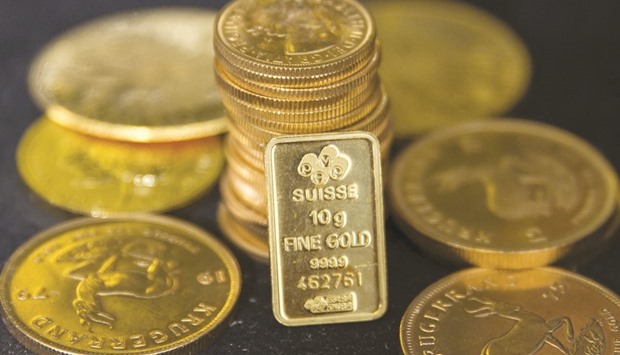
The flip side of declines in the euro, yen and pound in recent months has been a massive increase in gold buying as investors in Asia and Europe try to protect their wealth