


The date for swearing-in of All India Anna Dravida Munnetra Kazhagam general secretary V K Sasikala as Tamil Nadu chief minister is yet to be finalised, a party spokesperson said yesterday.
A Raj Bhavan official here also said governor C Vidyasagar Rao, who holds the post of Tamil Nadu Governor as additional charge, has left for Mumbai and there is no plan for him to travel to Chennai today.
“There is no information (yet) on the swearing-in date,” AIADMK spokesperson C R Saraswathi said amid speculation that it could be on February 9.
Meanwhile the Madras University Centenary Hall is being readied for the swearing in of Sasikala.
Rao accepted Chief Minister O Panneerselvam’s resignation on Monday.
The Supreme Court was yesterday moved seeking to restrain Sasikala from being sworn in as chief minister on the grounds that she along with late chief minister J Jayalalithaa were accused in a disproportionate assets case.
The PIL petitioner – a Chennai resident and general secretary of NGO Satta Panchayat Iyakkam – Senthil Kumar, has contended that the verdict in the disproportionate asserts case involving Jayalalithaa, Sasikala and her two relatives V N Sudhakaran and Elavarasi is likely to be pronounced next week.
The petitioner contended that if Sasikala was convicted and had to consequently resign then there was a possibility of riots erupting in the state.
The PIL may come up for hearing today.
Meanwhile London-based doctor Richard Beale, who treated Tamil Nadu chief minister J Jayalalithaa until she died in December, yesterday ruled out any “conspiracy” behind her death.
Addressing the media here, Beale said: “There was no conspiracy. She (Jayalalithaa) had severe infection. She had supportive care.”
The Tamil Nadu government organised the media meet involving Beale and doctors from Apollo Hospitals to clear the air surrounding the death of Jayalalithaa.
Beale said Jayalalithaa, who headed the AIADMK, was diagnosed with sepsis bacteria in blood. He said people with sepsis become unwell in hours or days.
He said sepsis and diabetes led to Jayalalithaa’s death, which he added was “totally unexpected” as she seemed to be recovering at one stage.
Beale said the issue of taking Jayalalithaa to London for treatment was discussed but was not taken forward as she was against it as the necessary medical facilities were available here.
He said the idea of exhuming Jayalalithaa’s body for post-mortem was ridiculous.
According to Tamil Nadu government doctor P Balaji, the total bill for treating Jayalalithaa came to Rs55mn. “I am told the bill has been given to the family members of Jayalalithaa.”
According to Babu K Abraham, Respiratory Medicine Specialist at Apollo Hospitals where she died, Jayalalithaa suffered cardiac arrest around 5pm on December 5.
She was given cardiopulmonary resuscitation (CPR) for 20 minutes. He said as there was no heart rhythm, Jayalalithaa was put on ECMO (extracorporeal membrane oxygenation) which would take 24 hours to show result.
Abraham said it was a collective medical decision comprising of all doctors who had treated Jayalalithaa including the doctors from AIIMS, New Delhi, that it was futile to continue with ECMO.
A decision was taken to remove ECMO after informing Jayalalithaa’s family.
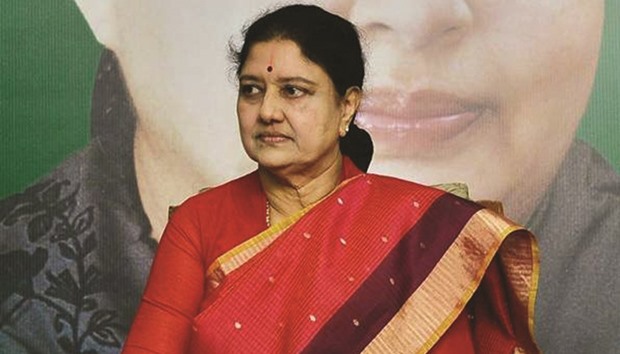
V K Sasikala