


The sign outside Brazil’s southern city of Curitiba says it all: “Here we apply the law.”
Brasilia may be the country’s capital but it’s here in what’s jokingly dubbed the “Republic of Curitiba” that an anti-corruption judge hopes to decide Brazil’s fate.
Sergio Moro heads the giant Operation Car Wash probe into top-level embezzlement and bribery around oil company Petrobras that has downed a string of powerful politicians and businessmen and seems likely to claim more victims.
The unprecedented assault on business as usual in Brazil has elevated Moro to hero status for most Brazilians — and provincial Curitiba, with a population of about 2mn, to a byword for tough justice.
“Curitiba is revolted by this corruption. When they hand out prison sentences to deputies, senators, goodness — it’s party time!” said lawyer Daniela Varela, 29, near Moro’s offices.
Operation Car Wash has uncovered an incredible web of pay-to-play contracts at state owned Petrobras, with bribes pouring into the pockets of powerful individuals and also a swathe of Brazil’s political parties.
Already Moro has charged or succeeded in convicting the likes of ex-president Luiz Inacio Lula da Silva, senior senators, and Marcelo Odebrecht, the former head of the Odebrecht construction giant which actually operated a special department to organise its bribes to politicians.
Another high-profile name is Eduardo Cunha, who was speaker of the lower house of Congress and the key figure in pushing through the impeachment of president Dilma Rousseff until he was jailed on bribe-taking charges.
Moro’s face is now a standard feature on banners at anti-corruption rallies around the country, and street vendor Wanderley Santos is one of his many fans.
“Soon this will be considered a historic site,” said Santos, 64, who sells shirts that read “I live in the Republic of Curitiba.”
The “republic” moniker comes from one of the wiretaps, which along with plea bargains, have been key weapons in Moro’s war on the elite.
An angry, frustrated Lula was recorded talking to his ally and then president Dilma Rousseff, who succeeded him in 2011, about the rampaging prosecutors who have doggedly accused him of taking bribes from Petrobras, including in the form of property.
“Personally I’m horrified by this republic of Curitiba,” the ex-president is heard saying in the leaked telephone conversation last year, clearly referring to the allegation in some circles that Moro’s team was out of control.
“Anything can happen in this country if a judge (Moro) wants it.”
That jibe has turned into a badge of honour for Moro’s fans.
Tourists here not only can buy “Republic” souvenirs but see the courts and prosecutors’ offices from their bus tour.
Supporters consider Moro as a future Supreme Court justice or even president, but the star judge keeps his cards close to his chest and is rarely seen in the streets of his own bastion.
“A colleague of mine picked him up once,” said one admiring taxi driver. “He was not in a suit and he hid under a baseball hat, barely saying a word the whole journey.
But it was him alright.”
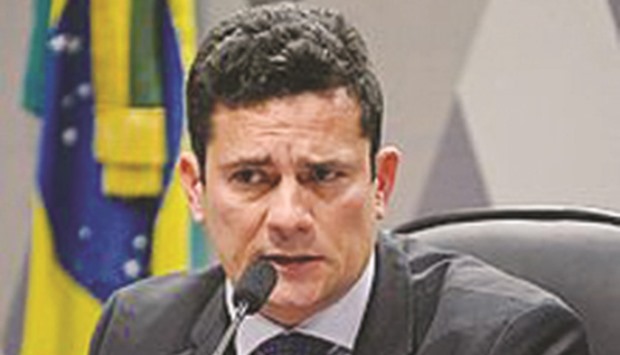
Supporters consider Moro as a future Supreme Court justice or even president,