


AT&T and Time Warner said they can avoid having the Federal Communications Commission scrutinise their proposed merger, eliminating a significant hurdle in the path of the $85.4bn deal that’s attracted criticism from president-elect Donald J Trump.
“While subject to change, it is currently anticipated that Time Warner will not need to transfer any of its FCC licences to AT&T in order to continue to conduct its business operations after the closing of the transaction,” the companies said in a regulatory filing.
Time Warner has been looking to transfer or sell its licences to another broadcaster for some time, according to a person familiar with the matter. Time Warner can contract with third parties instead of owning the licenses, the person said.
Avoiding the FCC could be key to the deal progressing. The FCC can be a harsher judge than the Justice Department, which is to review the transaction and has asked for detailed information, portending an in-depth antitrust investigation. The deal would combine the biggest US pay-TV and internet provider with one of the largest creators of TV programming, giving AT&T control of assets such as HBO and CNN.
AT&T says it’s in a different business than Time Warner and that the Justice Department has never denied a transaction that joins companies from different industries on antitrust grounds – that is, whether a deal reduces competition.
Reviews by the FCC consider broader factors, including whether a deal advances loosely defined public interests. In past deals, the agency has weighed such factors as speeding deployment of advanced services, ensuring that competing channels aren’t kept off pay-TV systems, and managing airwaves.
“The FCC’s review process is riddled with risk in a way that antitrust review isn’t,” Matthew Schettenhelm, a Bloomberg Intelligence analyst, said in an e-mail. The FCC’s decision effectively can’t be challenged in court, while an antitrust review always must meet a court’s legal test, Schettenhelm said. With Trump set to name new FCC leaders, that risk was likely too great, he said.
Spokesmen for each company declined to comment beyond the filing.
At issue are dozens of airwaves licenses that Time Warner holds, according to a Bloomberg review of FCC databases.
According to the person familiar with the matter, the licences are used by Time Warner’s cable networks to transmit programmes from where they’re made to satellites in space, then back down to pay-TV distributors who deliver them to people’s homes. One licence involves a small broadcast station near Atlanta, while the others are related to internal operations and new technology has made them irrelevant, the person said.
Analysts offered differing assessments on whether the effort to avoid FCC scrutiny could succeed.
If the licenses aren’t transferred to AT&T, “it would be very hard” for the FCC to assert jurisdiction, said Craig Moffett, an analyst at MoffettNathanson. Agency Republicans who would be in charge have opposed expansive claims to agency power, he said.
AT&T could simply drop the airwaves licences and use land lines for some tasks, or it could lease licences that are left behind as the rest of Time Warner is absorbed, Moffett said.
While it’s hard to judge without having details of AT&T’s plans, FCC officials might insist upon reviewing any licence changes, said Andrew Jay Schwartzman, senior counselor at Georgetown University’s law school in Washington.
“Precedent strongly suggests that satellite uplinks must be subject to full FCC review,” Schwartzman said.
If licences have to be transferred to AT&T, it would trigger a review by the agency, which can send deals into a lengthy public hearing process, essentially killing them through delay. That dynamic helped to end AT&T’s bid to buy smaller T-Mobile US in 2011, as well as top US cable provider Comcast Corp’s deal for Time Warner Cable in 2015. Trump remains opposed to the deal, Bloomberg reported last week, citing people familiar with the matter, though he hasn’t commented publicly on the transaction since October.
While Trump blasted the deal during the campaign, Time Warner shares have climbed more than 8% since the election on speculation that a Republican administration would be friendlier to the transaction. It’s unclear whether Trump would try to influence the regulatory review of the merger, either by pushing officials to impose conditions or to block the deal entirely.
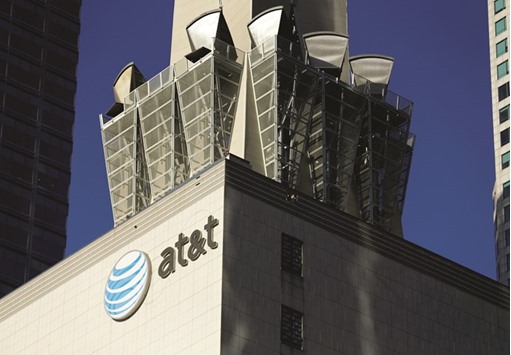
An AT&T logo and communication equipment is shown on a building in downtown Los Angeles, California. AT&T and Time Warner said they can avoid having the Federal Communications Commission scrutinise their proposed merger, eliminating a significant hurdle in the path of the $85.4bn deal that’s attracted criticism from president-elect Donald J Trump.