


Distressed debt opportunities are increasing across the Middle East and Africa as companies struggle with slumping currencies and tighter government spending, according to Sancta Capital Group Ltd.
“We’re still in the very early stages of this new distressed debt cycle,” chief investment officer Gus Chehayeb said in an interview in Dubai, where the company has a research office. “There’s a lot more pain to come. We have not yet seen the bottom. If this was a basketball game, we’re just finishing the first quarter.”
Oil’s more than 50% plunge since June 2014 has forced Saudi Arabia and its neighbours, among the world’s biggest crude producers, to rein-in spending to keep budget deficits in check. In Turkey, political turmoil following a failed military coup in July is pressuring banks and tourism companies, while lenders in Kenya, Nigeria, Zambia and Angola are straining because of slower growth, weaker currencies and rising levels of unpaid loans.
“The pace and severity of fiscal consolidation that has beset our region over the last two years has started what we believe is a secular change in corporate risk and expected returns,” said chief executive officer Ahmad Alanani, who co-founded Houston-based Sancta Capital with Chehayeb in April 2014. “The Middle East and Africa offers one of the most mispriced investment environments in the world.”
The value of Saudi Arabian companies is “starting to make sense” after two years of low oil prices and “austerity,” Alanani said in the same interview. Sancta Capital is focusing on listed equities that can benefit from a potential recovery in credit conditions and is working with local companies looking for different ways of funding working capital needs.
Distressed securities are the bank debt, trade claims or corporate bonds of companies or government entities that are experiencing financial or operational difficulty, default, or are bankrupt.
In the UAE, which was at the heart of the Gulf region’s 2008 downturn, Sancta Capital is seeing a “good flow of bank debt” as lenders look for ways to deal with stress on their loan books, especially with the planned introduction of new financial reporting standards, said Chehayeb.
During the 2008 slump, several government entities such as Dubai World Ltd were forced to restructure debt after property prices and asset values tumbled in the Gulf business hub and credit markets froze. In the current cycle, local banks and companies are feeling the brunt of the shock, rather than government firms, said Alanani.
“On one hand, local banks are having to finance the ballooning budget deficits of local governments, while on the other, their asset quality is coming under pressure as the business models and cost structures of local companies are being shaken by the wave of austerity that has gripped the region,” he said. “For local corporates, it’s proving near impossible to compete for funding with the government, which is exacerbating their troubles.”
Sancta Capital, which manages $50mn of assets and advises on a further $350mn, invests in public debt and equities. The company specialises in the acquisition and restructuring of distressed and non-performing private loans and trade claims.
Sancta Capital also expects Turkey to “become a fertile distressed landscape in the near-to medium-term,” Alanani said. “With the dramatic currency deterioration, companies are facing large foreign-currency liabilities and their debt-servicing capacity is coming under pressure.”
The tourism, real estate and retail sectors are especially suffering, which will inevitably lead to defaults, he said.
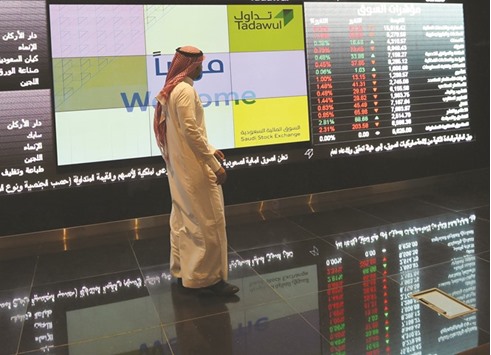
A Saudi investor monitors share prices at the Saudi Stock Exchange, or Tadawul. The value of Saudi Arabian companies is u201cstarting to make senseu201d after two years of low oil prices and u201causterity,u201d says Ahmad Alanani, CEO of Sancta Capital.