


Billionaire investors David and Simon Reuben are suing a Lloyds Banking Group unit for rigging interest rates benchmarks linked to a £300mn ($378mn) lending deal, the latest and probably the wealthiest in a succession of bank clients attempting to revive the Libor scandal through litigation.
Their firm, Aldersgate Investments, brought the case in a London court against Lloyds’ Bank of Scotland unit to overturn an interest-rate hedging product attached to a 2006 loan facility. The lawsuit also seeks the return of about £11.5mn Aldersgate has already paid.
Dozens of lawsuits have been filed in London over loans or interest-rate derivatives tied to Libor and other benchmarks that clients later discovered were being manipulated by banks for trading profit, or to give a false impression of financial strength. The cases, which threatened to expose embarrassing revelations about how much bank executives and employees knew about the misconduct, have mostly settled before trial.
Aldersgate alleges that Bank of Scotland didn’t reveal that it was “manipulating or attempting to manipulate Libor,” the Bahamas-based firm said in legal documents filed in May and made available this month.
The brothers would probably have stopped working with the bank had they known of the rigging, despite Simon Reuben’s “close business relationship” with then-Bank of Scotland executive Peter Cummings, according to the filing. Cummings was later fined and banned by UK market regulators for overseeing risky lending deals.
Lloyds spokesman Ian Kitts said the suit was without merit and declined to comment further because of the ongoing litigation.
Charles Stewart-Smith, a spokesman for the Reuben brothers, declined to comment. Cummings isn’t a defendant in the lawsuit.
The lender is also being sued by an elderly care homes business, a group of shareholders and several former employees in cases linked to the scandal. The bank admitted trying to rig the rate in 2014 and agreed to pay penalties of £218mn to UK and US regulators. The London interbank offered rate is a key benchmark behind more than $350tn in securities, including mortgages.
Aldersgate’s employees were “financial sophisticated” and “familiar with the operations of financial markets,” Bank of Scotland said in legal documents responding to the claim. The lender denied its employees gave Aldersgate financial advice, or that they gave a false impression about the integrity of Libor.
The Reubens decided in 2006 to move most of their banking business to Bank of Scotland because Simon Reuben had placed “considerable trust and confidence” in Cummings and his then- employer, according to their lawsuit documents. Knowledge that the bank was manipulating Libor would have caused “serious concern” and “would, most likely have brought the relationship between the bank and the group (including Aldersgate) to an end,” the documents said.
Neither side’s legal papers specify what the 1300mn facility was used for.
The Reubens’ investments include data centers, race courses, airports and mines, according to their website. They traded scrap metal and ran a carpet-selling business early in their careers and made money from high-profile London property developments, and are now worth about $6.4bn, according to the Bloomberg billionaire’s index.
In September 2006, Aldersgate teamed up with Bank of Scotland to buy UK homebuilder McCarthy & Stone in a £1.1bn leveraged deal. The company was taken over by its creditors the following year amid a crisis in the housing market.
Lloyds merged with Bank of Scotland in the midst of its state-brokered transaction with HBOS during the financial crisis.
Cummings, who ran the corporate banking unit and was HBOS’s highest paid banker, was fined £500,000 in 2012 and banned from working in the industry because of risk management failings. He later criticised the conduct of regulators.
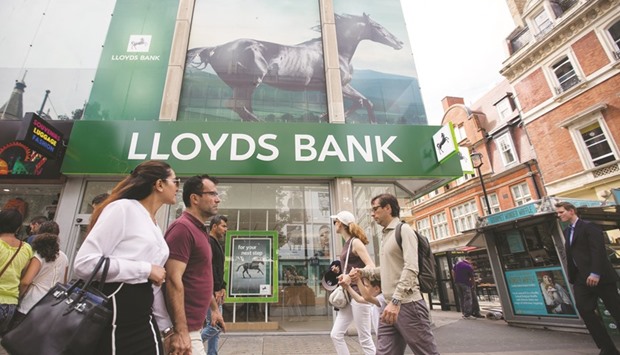
Pedestrians pass a Lloyds Bank branch on Oxford Street in London. Aldersgate Investments has brought a case in a London court against Lloyds’ Bank of Scotland unit to overturn an interest-rate hedging product attached to a 2006 loan facility. The lawsuit also seeks the return of about u00a311.5mn Aldersgate has already paid.