


Opec officials are embarking on an unusual flurry of meetings in the next six weeks, Opec sources said yesterday, to nail down details of their deal to cut production agreed last week in Algiers.
The chain of meetings, starting with ministers in Istanbul next week, signal that unlike in the first half of 2016, the exporting group is more serious now about managing the global supply glut and propping up prices.
First up, Opec energy ministers will be meeting each other and Russian officials for informal talks on oil output in Istanbul next week as the Turkish city hosts the World Energy Congress from October 9-13.
Citing Energy Minister Alexander Novak, Russia’s energy ministry said in a statement yesterday it expected an output freeze deal could be reached before the Opec meeting on November 30.
No decision however is expected to be taken in Istanbul, Opec sources said, but the meeting will be a chance for the officials to discuss the next step after the Algiers deal, which was agreed after intensive shuttle diplomacy.
“I have been extremely engaged in recent weeks,” said an Opec official involved in the talks.
The Organisation of the Petroleum Exporting Countries on September 28 agreed to reduce output to a range of 32.50mn barrels per day to 33mn bpd, its first output cut since the 2008 financial crisis.
But ministers left aside the delicate and critical issue of how much each of the 14 Opec members will produce, handing the matter to what the group terms a High Level Committee.
This committee, which will probably include Opec governors and national representatives – officials who report to their respective ministers – will work out details of country allocations ahead of Opec’s next ministerial meeting on November 30.
“Everyone will be very busy until the end of November,” said another Opec source.
The committee’s first meeting is expected to take place at Opec’s Vienna headquarters around October 28-29, Opec sources said.
This will be followed by meetings of the Opec governors to discuss Opec’s long-term strategy – delayed due to disagreements last year – and other administrative issues from November 1-4.
Then, a technical meeting of Opec’s national representatives will again meet in Vienna on November 23-24, followed possibly by a second meeting of the High Level Committee on November 25, Opec sources said, which will then present its recommendations to the ministers when they meet on November 30.
The number of meetings is not on the scale of the early 2000s, when Opec oil ministers met as many as seven times a year to micro manage supply policy, but it represents an increase in activity from the last few years.
“Consultations remain ongoing among the OPEC-14, the High Level Committee initiated by the Opec conference is moving forward on the implementation of the Algiers decision,” said Opec secretary general Mohammad Barkindo in a speech at the G-24 ministerial meeting in Washington.
“Steps are being taken to further develop a framework for high-level consultations between Opec and non-Opec oil-producing countries.
We believe there is firm and common ground for continuous collaborative efforts among producers, both within and outside Opec.”
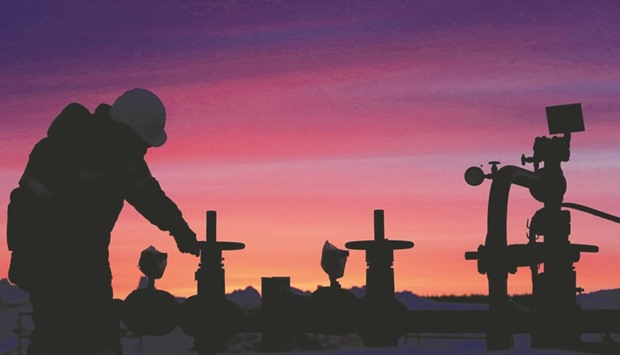
A worker checks the valve of an oil pipe at an oilfield owned by Russian state-owned oil producer Bashneft, northwest of Ufa. Opec officials are embarking on an unusual flurry of meetings in the next six weeks, Opec sources said yesterday, to nail down details of their deal to cut production agreed last week in Algiers.