


Sri Lanka said the main South Asian group of nations had to address cross-border terrorism, or else the bloc would be rendered non-functional.
A summit of the South Asian Association for Regional Co-operation (Saarc) was called off recently amid tensions between India and Pakistan following a deadly militant strike on an Indian army base.
Delhi accused Pakistan of sponsoring cross-border terrorism and backing insurgents who carried out the attack which killed 19 soldiers, a charge
Islamabad denied.
“Whether you like it or not, (the issue of) cross-border terrorism is on the table, so Saarc heads have to look at this and decide how we are going to handle it,” Sri Lankan Premier Ranil Wickremesinghe told reporters in Delhi after holding talks with Indian counterpart Narendra Modi.
“If we don’t do it, there’s no future for Saarc,” Wickremesinghe said, adding, “It will become non-functional”.
India pulled out of the Saarc summit as relations with Pakistan deteriorated following the September 18 attack.
The eight-nation bloc was founded in 1985 to foster regional co-operation, but its working has often been marred by tensions between the two nuclear-armed neighbours.
Last week, the Indian army carried out retaliatory “surgical strikes” against militants in Pakistan-controlled Kashmir, claiming to have inflicted significant casualties.
Pakistan denied the strikes took place, calling it “cross-
border firing”.
Earlier yesterday, Indian External Affairs Minister Sushma Swaraj called on Wickremesinghe.
The Sri Lankan prime minister will attend the opening plenary of the India Economic Summit in New Delhi today before
leaving for Colombo.
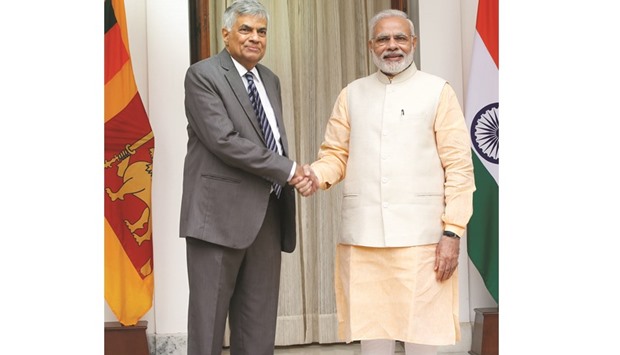
Sri Lanka Prime Minister Ranil Wickremesinghe, left, shakes hands with his Indian counterpart Narendra Modi during a photo opportunity at Hyderabad House in New Delhi yesterday.