


We won!” was the anti-European Union UK Independence Party’s (Ukip) rallying cry at its annual conference as members celebrated Britain’s vote to leave the EU, but underneath the euphoria lurked a fresh anxiety: what now?
Single-handedly led by Nigel Farage, a divisive, populist and widely recognised politician, Ukip played a major role in persuading Britons to leave the EU at a June 23 referendum, ending the party’s 25-year quest for “Brexit”.
But Farage has stepped aside to export his brand of anti-establishment politics to Europe and the US, leaving behind a successor who is little known outside political circles, a funding issue and a party ravaged by infighting.
New leader Diane James set out her agenda to Ukip activists in Bournemouth, saying they needed to professionalise, broaden their policies beyond the EU, and overtake the second-largest party, Labour.
“What I’ve got to do is make sure Ukip is a winning machine,” she told reporters. “As far as I’m concerned we are the opposition party in waiting.”
Ukip came first in European Parliament elections in 2014 and won nearly 4mn votes at a 2015 national election — the third-biggest share — but under Britain’s first-past-the-post electoral system they hold only one of 650 parliamentary seats.
The Brexit vote was in large part fuelled by a backlash against the political establishment, signalling a rare window of opportunity to break into a political arena dominated for a century by two main parties: the centre-right Conservatives and the socialist-rooted Labour Party.
“The good news for Ukip is they maintain this potential, this foundation of people who are disaffected, disenfranchised, distrusting, disapproving, dissatisfied with politics in this country,” said Joe Twyman, head of political and social research at pollster YouGov.
“No one’s quite sure where the upper ceiling for this is.”
Ukip’s success draws frequent comparison with US presidential candidate Donald Trump’s populist campaign, to which Farage lent his support at a rally in Mississippi last month.
For £12 Ukip members at the conference could buy a “Make Britain Great Again” baseball cap, aping Trump’s nationalist campaign slogan.
However, Ukip faces a challenge to make the transition from a single-issue party to one that voters trust to run the country.
Short-term, the party agrees upon its role as a Brexit watchdog to ensure the Conservative government delivers an exit deal that meets the demands of Ukip voters — immigration controls, freedom from Brussels and global free-trade deals.
Longer-term, its future is more contentious.
James wants to spend her first 100 days building a policy platform that straddles the political spectrum, appealing to disaffected Conservative voters in the south and Labour voters in the north.
But there are many conflicting views within the party and its internal politics is often vicious. One faction wants a harder, more right-wing line on issues like multiculturalism, and another wants Ukip to focus on becoming a libertarian party.
Previously held together by the sheer force of Farage’s personality, the fragile party unity was shaken only hours after James’s coronation when a row erupted over her decision to deny a rival, Neil Hamilton, a speaking slot at the conference.
Later, his signature was messily defaced on a mural upon which conference delegates had been asked to leave messages celebrating the party’s success.
Many Ukip members believe that it is away from personality-driven national politics, that the party’s prospects will flourish or founder.
Ukip local-level politician Jack Duffin says the party has to go from the bottom up, solving voter issues such as refuse collection, road quality and street lighting.
“Focusing locally makes a world of difference to a campaign,” Duffin said. “What do people see from politicians? They see empty promise after empty promise.”
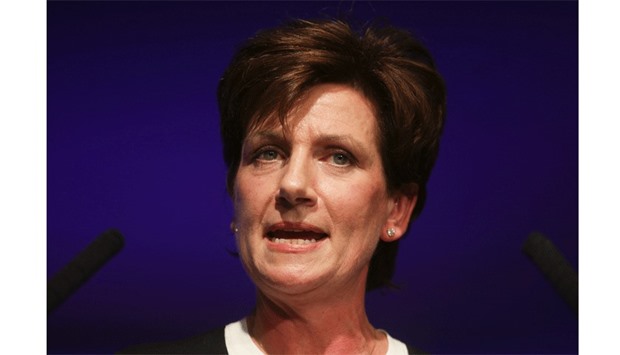
u201cWhat I’ve got to do is make sure Ukip is a winning machine. As far as I’m concerned we are the opposition party in waitingu201d