


British inflation unexpectedly held steady in August despite a big rise in the cost of imported raw materials after June’s vote to leave the European Union, keeping the prospect of another Bank of England rate cut in play.
Consumer price inflation stayed unchanged at 0.6%, a contrast to fuel and material costs for factories which rose at their fastest rate in nearly five years, up 7.6% on a year earlier, official figures showed yesterday.
Economists said inflation was unlikely to resist pressure from sterling’s 10% post-referendum fall for long.
“Despite this downside surprise...we still see signs that inflation is pushing higher,” Elizabeth Martins at HSBC said, citing the biggest monthly rise in food prices in 2-1/2 years and rising transport costs after 18 months of deflation.
Economists polled by Reuters had mostly expected inflation to edge up to a 21-month high of 0.7%.
“Raw material costs have risen for the second month running, partly due to the falling value of the pound, though there is little sign of this feeding through to consumer prices yet,” ONS statistician Mike Prestwood said
Inflation last month was lower than the BoE’s estimate of 0.8%, giving it confidence to press ahead with a new rate cut in November, Pantheon Macroeconomics’s Samuel Tombs said.
“Above-target inflation in 2017, however, likely will ensure that the (BoE) holds back from additional government bond purchases next year,” he added. Last month the Bank cut rates for the first time since 2009 and restarted its quantitative easing programme.
It also said most policymakers expected to cut rates again this year.
Signs of a quick bounce back in the economy since then has caused some economists to question the chances of a further rate cut, especially as the BoE expects inflation to overshoot its 2% target later next year and in 2018.
Lower prices for clothing, hotels and wine kept inflation down in August, offsetting an upward effect from fuel prices, food and airfares. Core consumer price inflation, excluding food and energy costs, unexpectedly held steady at 1.3%.
The ONS data showed manufacturers’ input costs jumped by the largest amount since December 2011, led by an 18.9% rise in the cost of imported metal.
But factories raised the prices they charged by just 0.8%, less than economists expected, though still the biggest increase since January 2014.
HSBC’s Martins said this was unlikely to last.”We believe that, in spite of the slowdown in the economy, there is scope for some of these higher costs to be passed onto consumers.”
Annual house price inflation, which is not included in the CPI index, eased to a four-month low of 8.3% in July.
Sterling skidded by more than 1% to hit two-week lows yesterday, after UK inflation came in below expectations and as investors refocused on the risk that Britain’s negotiations to leave the European Union could hurt the economy. The pound had been on a winning streak until last Tuesday when it hit a seven-week high of $1.3445 that left it more than 5% up from a three-decade low plumbed in July soon after the EU referendum, as investors trimmed record short positions against the currency.
But since then, with the head of the Bank of England leaving the door open to more monetary easing, and with Brexit negotiations back in the headlines after the British parliament returned from recess, sterling has shed almost 2%.
Brexit minister David Davis said on Monday that Britain will make its guidelines for talks on leaving the European Union public by the time it triggers the formal exit process, in the first indication of when Britons will find out what the government hopes to achieve in the talks.
“We’ve had some Brexit issues coming into focus in the market in the last few days, which does indicate that there’s still a fair degree of division on the politics side, after a couple of months of not a whole lot on Brexit,” said Bank of Tokyo-Mitsubishi UFJ currency strategist Derek Halpenny.
EU leaders will meet at a summit in Bratislava on Friday, where Brexit is likely to be high on the agenda, which Halpenny said might be a focus point for investors.
Against the euro, the pound also fell 1.1% to a two-week low of 85.21 pence.
The Bank of England, which starts a two-day policy meeting today, said last month that sterling’s more than 10% fall in the wake of the Brexit vote was likely to cause inflation to overshoot its 2% target.
But the central bank said most policymakers were likely to see through this jump and would keep policy accommodative to support the economy.
The BoE is not expected to announce new measures this week, having cut interest rates to record lows and reintroduced an asset-purchase programme last month.
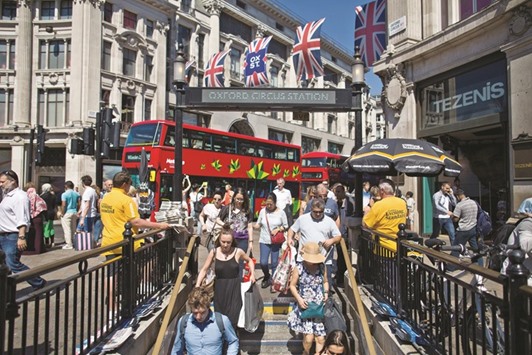
Pedestrians and commuters enter Oxford Circus Underground station in London. British inflation unexpectedly held steady in August despite a big rise in the cost of imported raw materials after June’s vote to leave the European Union, keeping the prospect of another Bank of England rate cut in play.