


Automakers’ decision to scale back US discounts in August is a sign they’re willing to maintain some price discipline, even if it raises the odds that industrywide annual sales will fall for the first time in seven years.
August reports arriving today may show a seasonally adjusted annual sales pace of about 17.2mn cars and light trucks, according to a Bloomberg survey of analysts, down from a 17.9mn rate in July that was the highest of the year. Incentives were lower than in July, when General Motors Co offered 20% cash back on several Chevrolet models, according to vehicle-shopping website TrueCar.
Automakers aren’t chasing sales at any cost, the practice that helped force GM and Chrysler to restructure through bankruptcy in 2009. While discounts have, at least on paper, crept back up to pre-recession levels, there’s more cushion than ever: Transaction prices are at a record high as buyers opt for bigger vehicles with nicer interiors, electronics and driver-assist features. With that profit protection, carmakers don’t mind if the industry snaps a record streak of sales increases.
“It may or may not be a record but, look, any time you’re above 15mn is good,” said John Mendel, Honda Motor Co’s head of US sales.
“I’m bullish on the rest of the year.”
The discipline is helping the industry stay profitable while it’s still backed by strong, if weakening, underlying trends: low unemployment, available credit, high equity valuations, cheap gasoline.
Even so, that has failed to cheer investors, who are more preoccupied with the lack of growth in the US market and potential disruption to the industry from new technology, new entrants and new concepts of personal mobility. While the Standard & Poor’s 500 Index gained 6.5% this year through Tuesday, GM lost 6.9%, Ford Motor Co fell 11% and Fiat Chrysler Automobiles plunged 24%.
And it’s not just the traditional US automakers under pressure from investors: Toyota Motor Corp, Daimler and BMW have all dropped 17% or more in 2016.
With the discounts eased, industrywide sales may have fallen about 3.5% in August, according to the average estimate in the Bloomberg survey. Among the projected declines are 8.2% for Ford, 4.9% for GM and 6.6% for Volkswagen’s VW and Audi brands. GM said on Tuesday that its sales would probably be down 5% to 6%.
Buyers continue to favour pickups and sport utility vehicles. Light trucks, which also include minivans, probably rose to 59% of all sales in August, according to Goldman Sachs, from 56% a year earlier.
The truck demand is helping Fiat Chrysler. Its deliveries are predicted to rise 5%, compared with year-earlier results that were revised last month after dealers and federal regulators called its reporting practices into question.
One company bucking the truck trend is Honda, whose car sales rose 6.8% through July — more than double its 3.3% gain for light trucks. Deliveries of the redesigned Civic gained 18% through July, overtaking Toyota’s Corolla, while sales of the refreshed Accord rose 5.8%, cutting the Toyota Camry’s lead almost in half. For August, analysts estimated Honda’s sales climbed 1%.
“We’re not doing it with incentives,” but rather with improved models, Honda’s Mendel said.
“Great product still wins.”
People crowd around a 2017 Ford Fusion being displayed at the North American International Auto Show in Detroit in January 2016. Industrywide sales may have fallen about 3.5% in August, according to the average estimate in the Bloomberg survey. Among the projected declines are 8.2% for Ford, 4.9% for GM and 6.6% for Volkswagen’s VW and Audi brands.
United Airlines hires No 2 at American to
be its president
Reuters
New York
United Continental Holdings has hired the No 2 executive at rival American Airlines Group, Scott Kirby, to be its president, the companies said.
The move, effective immediately, is the latest attempt by United’s reshuffled board and new chief executive officer Oscar Munoz to shape a new strategy and boost the airline’s stock price.
United has lagged other US carriers in on-time arrivals and profit margins, though its results have recently improved.
United’s shares rose more than 1% in after-market trading.
American’s fell nearly 2%.
In a letter to employees, Munoz called Kirby’s hiring the “culmination” of his forming a new leadership team.
“This move will allow me to sharpen my own focus as CEO on the core mission of driving United’s overall strategy, business innovation and financial performance,” he said.
Industry experts welcomed United’s move.
“United has lacked intellectual rigor,” said consultant Robert Mann.” Scott going over there will absolutely shake up the place.”
Travel industry analyst Henry Harteveldt said United “got themselves a star player.”
Earlier this month, United appointed a new chief financial officer and new chief commercial officer, each with airline industry expertise.
The company came under pressure from activist investors in the spring to name airline veterans to its board who could guide Munoz, a former railroad executive who took the helm of United in September 2015.
At American, chief operating officer Robert Isom will replace Kirby as president, the airline said in a news release.
The management change stemmed from succession planning and the conclusion that “it would not be able to retain its existing executive team in their current roles,” after “conversations regarding career expectations,” the airline said.
A filing by American showed the airline agreed to pay Kirby a cash severance of $3.85mn and to accelerate the vesting of his stock.
The timeline that led to Kirby’s move was not immediately clear.
A United spokeswoman said the appointment followed several conversations between Kirby and Munoz, 57.
Industry watchers said a chance to become CEO of United may have attracted Kirby, 49, to the role.
At American, board director John Cahill said in a statement on Monday he looked forward to the “leadership for many years to come” of CEO Doug Parker, 54.
Reporting to Kirby at United will be chief commercial officer Julia Haywood and chief operations officer Greg Hart.
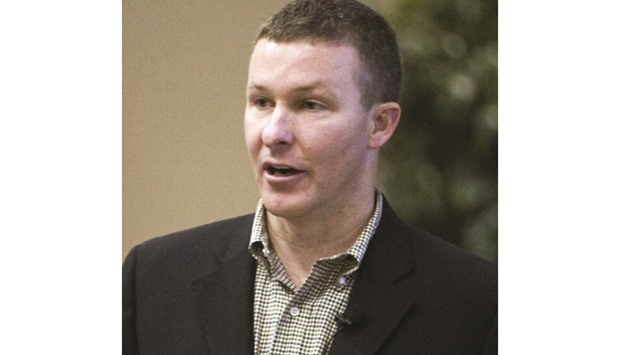
Kirby: Moving on.