


Russian breaststroker Yulia Efimova said yesterday she would take part in the Rio Olympics, a day after winning an appeal against a doping ban, but there was no immediate confirmation from swimming’s governing body FINA.
Efimova posted a picture of herself on Instagram, looking surprised and tearful, with the caption: “I’m going to the Olympics. I couldn’t be more proud and relieved.”
The four-time world champion was handed a lifeline on Thursday when the Court of Arbitration for Sport (CAS) upheld her appeal against her ban from the Games, whose preparations have been overshadowed by revelations of widespread state-sponsored doping in Russia. Last-minute appeals by banned Russians have turned the build-up into a legal obstacle course, creating uncertainty for the athletes and for their rivals.
Efimova’s name is currently missing from the starting list for the 100m breaststroke, whose heats take place today, and Wednesday’s 200m, the event in which she won an Olympic bronze medal in London in 2012. Russian media reports quoted Vladimir Salnikov, head of the country’s swimming federation, as saying FINA had written to CAS to confirm it supported the readmission of Efimova and four other banned Russian swimmers — Natalia Lovtsova, Darya Ustinova, Mikhail Dovgalyuk and Anastasia Krapivina.
A FINA spokesman declined to comment, saying the federation would issue a statement “if we have something to say”.
Efimova, 24, was banned by FINA between October 2013 and February 2015 after testing positive for traces of the anabolic steroid DHEA. That triggered an automatic suspension from Rio according to criteria laid down by the International Olympic Committee last month in response to an independent report confirming state-backed Russian doping across a wide range of sports.
But the Court of Arbitration for Sport said the Olympic ban was “unenforceable” because an athlete could not be punished twice for the same doping offence. A spokesman for the Russian Olympic Committee said Efimova was already in Rio.
The Russian was also briefly suspended after testing positive for meldonium this year, but cleared in July.
Meldonium was added to the World Anti-Doping Agency’s list of banned substances from January 1, but some positive tests were later overturned after the agency said there was a lack of clear scientific evidence about how long it takes for the drug to be excreted from the body.
Banned Lebedev can compete
Russia’s two-time world champion Viktor Lebedev has been cleared to wrestle in Rio in the wake of the Russian doping scandal, the head of Russia’s Olympic delegation said yesterday.
“For Viktor Lebedev, all is well,” delegation chief Igor Kazikov said, adding that Lebedev, who appealed against a ban along with other Russian athletes, had been authorised to compete by a special International Olympic Committee commission. “He has been given authorisation by the IOC commission,” said the official.
The three-member IOC commission has final say on which Russian athletes can compete in the Rio Games after allegations of state-sponsored doping contained in a report commissioned by the World Anti-Doping Agency led to wholesale bans. With Lebedev restored to competition, the Russian delegation has risen to 277 athletes.
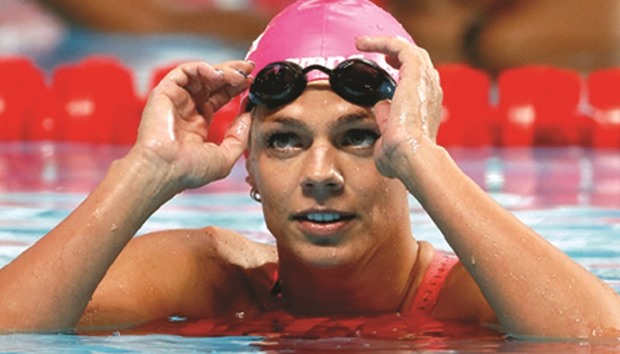
Yulia Efimova