


Pakistan’s currency is overvalued by as much as 20% and is contributing to the country’s declining exports, along with low commodity prices, power outages and security concerns, according to the International Monetary Fund.
A December study from the Washington-based lender found the exchange rate was “broadly” overvalued by 5% to 20%, Harald Finger, the IMF’s mission chief for Pakistan, said in a phone interview from Washington. “More or less that’s still our assessment.”
The rupee and Pakistan’s stocks have been among Asia’s best performers since 2013, when Prime Minister Nawaz Sharif – who’s in London recovering from open-heart surgery – took a $6.6bn loan from the IMF to avert a balance-of-payments crisis. Finance Minister Ishaq Dar reiterated last month that Pakistan doesn’t need another IMF programme with the current one due to finish at the end of September.
However, despite a pick-up in economic growth and smaller deficits, exports are forecast to continue falling as global demand slows. Pakistan’s overseas shipments for the year through June are poised to complete the biggest drop since 2010, according to the commerce ministry.
Pakistan’s rupee has remained stable this year and little changed at about 104.7 per dollar.
In an attempt to aid exports, Dar last month introduced a zero-rated sales tax regime for exporters of textiles, leather, surgical instruments, sports goods and carpets, while presenting the government’s Rs4.89tn ($46.7bn) budget for the fiscal year starting July 1.
“The continued decline in exports is a cause for concern, to a good extent that’s due to a fall in international prices for cotton and other commodities,” said Finger. “There are a number of other factors affecting it too; there are security issues, there are continued power outages, even though they are declining now, that’s still a factor. There are issues around the business climate, and so on, and also one of these factors is also the real effective exchange rate.”
Even so, Sharif’s administration has achieved the IMF’s medium-term goal of increasing gross domestic product growth to near 5% from an average of about 3% in the five years through 2013.
The government is now aiming for 5.7% growth this fiscal year as China starts investing $45bn in an economic corridor. If successful, it would be the first time in at least a decade that any Pakistani government has hit a growth target.
“Overall, the outlook is positive for Pakistan and the capacity to repay the fund is strong,” Finger said. “Their external debt level is certainly sustainable, there will be some increases in debt repayments coming up of course in the coming years, but there are no large spikes in the repayment profile.”
Yet about $35bn worth of debt is maturing in the remainder of 2016 – most of which is rupee-denominated. About 80% of the total is due between July to September, according to data compiled by Bloomberg.
Most of that is Treasury bills held by local banks and certificates held by a large group of private savers, said Finger.
“These get routinely rolled over, so I wouldn’t read to much into a large amortisation profile,” he said.
Efforts to push through all aspects of the IMF programme also haven’t gone smoothly. Sharif’s attempts to privatise entities like Pakistan International Airlines Corp and Pakistan Steel Mills have been met labour protests and political resistance. An interest-rate cut by the State Bank of Pakistan in May as inflation quickened caught investors by surprise, raising questions around moves to bring more autonomy to the central bank.
While Pakistan plans to sell the airline by March next year, there are risks of future delays to the privatization plans after the IMF program concludes, along with “policy slippages” ahead of the country’s 2018 elections, said Finger.
“There’s certainly a need to continue with prudent policies also during the pre-election period,” said Finger. “There’s certainly a risk looking at international experience in a pre- election phase that policy priorities change, but overall I think this government has shown its determination to follow prudent policies.”
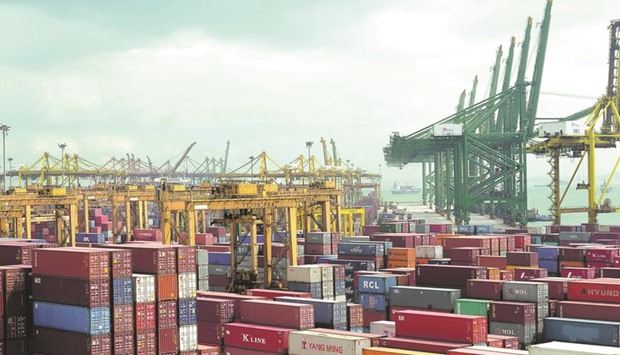
Pakistan’s overseas shipments for the year through June are set for the biggest drop since 2010, according to the commerce ministry.