


When Cubic Energy’s bankruptcy plan took effect on March 1, shareholders of the Dallas-based oil and gas company were wiped out. Among the losers was Wells Fargo & Co.
The bank had a nearly 10% stake in Cubic Energy at the end of 2015 – worth more than $25mn at the company’s peak - through a private equity-style unit called Wells Fargo Energy Capital.
The No 3 US bank by assets, like its rivals, has billions of dollars’ worth of exposure to the struggling energy industry through regular loans that are souring. But the case of Cubic Energy shows that Wells Fargo went further into risky areas than other banks, and may now face a reckoning.
The whole sector has been devastated by a 60% plunge in oil prices from highs of over $100 a barrel in 2014. The price drop has squeezed energy firms, especially smaller ones, and made it harder for them to pay back loans.
Some of Wells Fargo’s most volatile exposure sits within Wells Fargo Energy Capital, a unit that sought fat returns through equity investments and high-risk loans to small companies like Cubic Energy, assuming the energy boom would last.
On top of the equity investment, Cubic owed Wells Fargo nearly $30mn in debt as of November 30, according to its reorganisation plan. The bank received land and other assets in Louisiana as part of the reorganisation. What those Louisiana assets are worth today is anyone’s guess, said Jon Ross, who was Cubic’s vice president of operations until it collapsed.
“Valuations now are so crazy in the oil and gas industry,” he said. “What is really worth anything at $40 oil and $2 natural gas? So it’s hard for me to say right now - and I’m being honest - how you value anything.”
Wells Fargo Energy Capital is small relative to the bank’s entire $915bn-plus loan portfolio, or even its $42bn energy loan book. But it is raising concerns for shareholders and Wall Street analysts.
The banking industry’s exposure to the energy sector has been a hot topic and is expected to get more attention this week as first-quarter earnings kick off with JPMorgan Chase & Co yesterday. Wells Fargo is set to report today.
Wells Fargo Energy Capital, based in Houston, prided itself on employees who knew the ins and outs of drilling as much as financing, said Cubic Energy’s Ross.
“Our lender had a master’s in geology: he understood the rock,” he said. “He could talk in the field and understood what we were doing.”
But few experts predicted the oil price rout, which has made it impossible for some companies to earn money from extracting new resources at all. About one-third of publicly traded oil and gas-related companies, with more than $150bn in debt, are now at high risk of bankruptcy this year, according to a report by auditing and consulting firm Deloitte.
Wells Fargo Energy Capital had a $2.1bn portfolio as of January 2014, according to a presentation by its president, Mark Green. Today it is about the same size, a person familiar with the business told Reuters. Many analysts expect the value to eventually be marked down.
Wells Fargo, which does not issue regular, precise updates on the value of that portfolio, declined to comment on Cubic, or its broader approach to energy industry financing, and did not make executives available for interview, because the company is preparing to release earnings soon.
More than half of the unit’s exposure is in the form of equity, considered the riskiest type of financing because shareholders typically see their investment wiped out in a bankruptcy.
“Loss rates on this type of exposure will be very high,” said Kevin Barker, an analyst at Piper Jaffray.
Bank executives were publicly bullish about Wells Fargo Energy Capital’s appetite for investment and lending opportunities before oil prices collapsed. For instance, Green’s presentation said the business was “aggressively seeking” new deals.
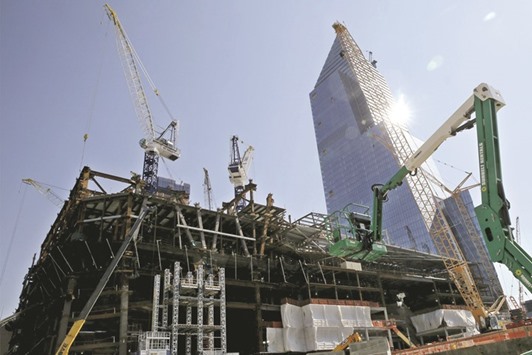
Construction cranes tower over the base of the 30 Hudson Yards building, Wells Fargo & Co’s future offices on Manhattan’s west side in New York. The bank had a nearly 10% stake in Cubic Energy at the end of 2015 u2013 worth more than $25mn at the company’s peak u2013 through a private equity-style unit called Wells Fargo Energy Capital.