


 |
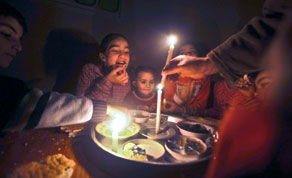
| Palestinian children use a candle light during a power cut in Jabaliya refugee camp in the northern Gaza Strip on Saturday |
The Gaza Strip’s sole power station shuddered to a halt yesterday, leaving residents without electricity for long periods and endangering the lives of hospital patients, officials said.
Just 48 hours after some 450,000 litres of fuel were delivered to the coastal strip from Israel on Friday, the Gaza Power Authority said its tanks had run dry.
Consumers were being rationed to eight hours of power supply a day, local residents said.
“The generating station in Gaza City was stopped completely this morning after two days of working,” the authority said in a statement, calling on “all parties to take immediate measures to solve the fuel crisis completely and permanently.” Bassem Naim, health minister in Gaza’s Hamas-run government, said the fuel shortage was placing lives in jeopardy.
“Fifty percent of our ambulances and vehicles are immobilised,” he said in a statement. “We are under constant strain from power cuts.”
He said that in one case a hospital operating theatre had its power cut during an operation.
“This is threatening the lives of thousands of sick people,’ he said.
Israeli officials say that the fuel crisis is an internal Palestinian matter and that if the West Bank-based Palestinian Authority places and pays for another Gaza fuel order, Israel will facilitate it.
“Israel has never prevented the transfer of fuel and will not do so in the future,” said Guy Inbar, a spokesman for the Israeli military department in charge of co-ordinating tightly-controlled access between Israel and Gaza.
Friday’s delivery was made after Egyptian officials reached an agreement with Israel to permit the transfer of fuel to enable the Gaza power plant to function.
An Egyptian official said the arrangement had been for the delivery of 900,000 litres of fuel. It was not clear when the remainder might be delivered.
The Gaza plant supplies nearly a third of Gaza’s electricity with the rest coming from privately-operated generators. The plant last stopped generating power on March 10, for the third time in four weeks, causing power cuts of up to 18 hours per day, according to the UN humanitarian agency, OCHA.