


BASF is working with advisers and financing banks to examine the merits of making a counter bid for DuPont Co, the $55bn chemical company that agreed to a merger with Dow Chemical Co in December, people with knowledge of the matter said.
The Ludwigshafen, Germany-based chemical producer hasn’t made a decision yet about proceeding with an offer, said the people, who asked not to be identified because the information is private. No formal approach has been made to DuPont, the people said.
BASF, which has been working with advisers since last year to explore a bid for DuPont, held talks with the US company before it agreed to merge with Dow, said the people. Those talks didn’t progress, the people said.
BASF is the world’s third-largest producer of weed-killers, insecticides and other pesticides, after Syngenta AG and Bayer AG, according to data compiled by Bloomberg. Buying DuPont would add to its agricultural chemical portfolio and give it the second-biggest producer of crop seeds, such as corn genetically modified to withstand insects and herbicides. Monsanto Co is the largest seed company.
BASF has no seed business, so DuPont would fill an important gap in its agriculture business, said James Sheehan, an Atlanta-based analyst at Suntrust Robinson Humphrey.
“DuPont would be a good strategic fit for them,” Sheehan said by phone Friday. He rates DuPont neutral and doesn’t rate BASF. “The synergies for all of these potential deals involve combining the strength of one with the weakness of the partner.”
Representatives of BASF and DuPont declined to comment. DuPont, based in Wilmington, Delaware, jumped 5.3% in afterhours trading. BASF has a market value of about €58bn ($64bn). Dow, based in Midland, Michigan, has a market value of about $56bn.
BASF Chief Executive Officer Kurt Bock said last month that he considered a deal in the field of agricultural chemicals amid China’s takeover of Syngenta and the merger of Dow and DuPont, before deciding to stay put.
“We look at the industry and try to understand what is our position,” Bock said in a Bloomberg Television interview February 26. “We feel comfortable with what we have. You have to look at multiples, price expectations in the market, and have to make up your mind whether that is something which is really creating value or not.”
DuPont discussed potential deals with multiple companies ahead of the December 11 agreement with Dow, according to a March 1 regulatory filing by DowDuPont, the name of the merged company. DuPont may be obligated to pay Dow a termination fee of $1.9bn if it breaks the deal, the filing shows.
The largest seed and pesticide makers have been discussing deals since Monsanto offered to buy Switzerland’s Syngenta nearly a year ago. Syngenta rebuffed Monsanto and in February agreed to be acquired by China National Chemical Co.
Meanwhile, Dow and DuPont’s merger of equals is the largest deal ever in the chemical industry, creating a company with combined market values of $111bn and assembling the world’s largest agriculture business. DowDuPont would be the world’s second-biggest chemical company after BASF.
DuPont Chairman and CEO Ed Breen met with the chairman of “a large, publicly traded chemical company” in Short Hills, New Jersey, on November 25 to discuss the purchase of DuPont’s agriculture business and other transactions, the March filing shows.
Short Hills is about 7 miles from BASF’s US headquarters in Florham Park. Breen received a letter from the unidentified company’s chairman on December 10 proposing preliminary talks on a potential combination, according to the filing.
DuPont announced its agreement to merge with Dow the next day.
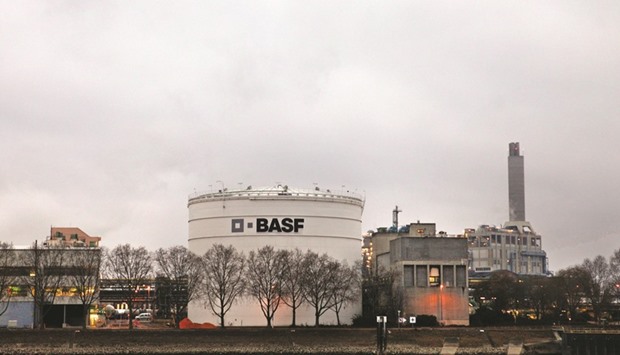
BASF logo is seen on a storage tank at the company’s plant in Ludwigshafen, Germany. BASF is working with advisers and financing banks to examine the merits of making a counter bid for DuPont Co, according to reports.