


Reuters/Muscat
Omanis voted yesterday to choose representatives in the 84-member consultative Shura Council, an election overshadowed by discontent over unemployment and alleged government corruption.

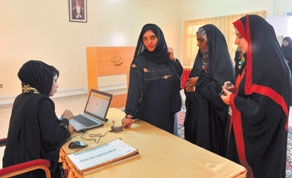
A woman scans her fingerprint before casting her vote at a polling station in Muscat during the Shura Council elections yesterday
Omanis said many women turned out to cast ballots in the 105 polling stations across the country, raising the prospect that women would win parliamentary seats they failed to capture four years ago.
“We are now more confident and we are not letting our husbands decide who to vote for this time,” Sharifa al-Shamsi, 27, a business studies graduate, said at a Muscat polling station. “Also, the women candidates running for election are more educated,” she added.
The usually tranquil sultanate was hit by protests in February, part of the Arab Spring of uprisings that toppled the rulers of Egypt and Tunisia.
Omanis focused their demands on higher wages, more jobs and an end to graft rather than a change of government. Many also called for more powers for the council.
Sultan Qaboos promised after the unrest to give the Shura Council some legislative powers, and announced programmes to create jobs and fight corruption.
About 520,000 people registered to vote for the Shura Council, compared with 388,000 in the last election in 2007. Districts with a population of 30,000 elect two members, smaller districts choose one. The first elections were held in 1991.
The voters this time will make up nearly 33% of Oman’s local population of 1.6mn people. About 40% of the people in the sultanate are under the voting age of 21, according to official figures.
Some 1,300 candidates are competing in the election, of whom 77 are women, up from 700 candidates who ran in the previous election in 2007, including 21 women.
Deena al-Balushi, a candidate for Seeb town in the capital Muscat, said that public campaigning, which the government has allowed for the first time, made a big difference in the higher number of women standing for election.
“Women candidates, who campaigned quietly in 2007, this time used newspaper advertisements, street posters, public speaking and the electronics media to publicise their candidacy,” Balushi, a legal corporate counsellor, said