


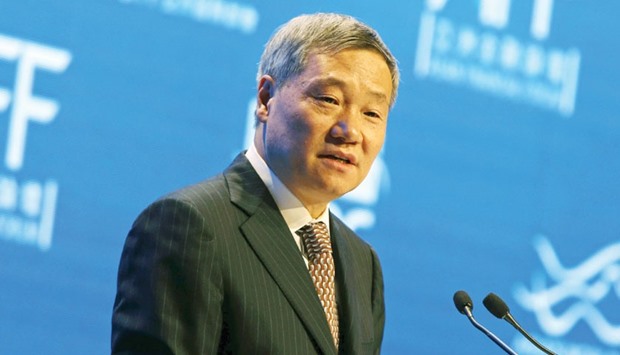
An immature bourse and participants, incomplete trading rules, an inadequate market system and an inappropriate regulatory system were to blame and regulators will learn from their mistakes, Xiao said in transcript of an internal meeting of the China Securities Regulatory Commission that was posted on the agency’s website yesterday.
“The slumping stock market, fleeing liquidity, speedy deleveraging activities, augmented by self-defeating redemption at mutual funds and selloffs in futures, spiralled into a full- scale crisis like a domino effect,” Xiao said in the transcript.
“During the abnormal volatility in the stock market, some institutions let illegal and irregular activities ride instead of taking responsibility to stabilise the market.” Chinese shares fell into a bear market again this week, wiping out gains from an unprecedented state rescue amid waning confidence in the government’s ability to manage the country’s financial markets. The initial collapse in June, which came after cheerleading by state media helped fuel an unprecedented boom in mainland equities, triggered stock purchases by the government, restrictions on trading and a temporary ban on initial public offerings.
It’s been a wild ride for Chinese stock investors. The Shanghai Composite Index more than doubled in the 12 months through May before losing 34% by the end of September as regulators failed to manage a surge in leveraged bets by individual investors. A state-sponsored market rescue campaign sparked a rally towards the end of the year but those gains have been wiped out this month.
Losses this year were fuelled by a controversial circuit-break system, which authorities scrapped in the first week of January after finding that it spurred investors to rush for the exits on big down days. The turbulence in China has rippled through global markets this year, contributing to a 8.5% drop in the MSCI All-Country World Index.
The CSRC will try to learn from its overseas counterparts but will avoid wholesale adoption of another nation’s regulatory system, said Xiao. IPO reforms will be gradual and the registration system for offerings won’t be settled in one step, he said. The Shanghai-Hong Kong stock link will be improved, a Shenzhen-Hong Kong connect will be started and a link between the Shanghai and London bourses will be looked into, Xiao said.
The watchdog will encourage mergers and acquisitions among listed companies, will cap margin trading within a “reasonable overall size,” strictly regulate program-trading and curb excessive speculation in futures, he said.