


Indonesia’s trade balance moved back into surplus in 2015, after three years of deficits, but the turnaround mostly showed how sluggish the economy has been.
Southeast Asia’s largest economy posted a $7.51bn surplus in 2015, chiefly because of a nearly 20% plunge in imports, underlining weak domestic consumption and investment. Every month had a surplus except November and December, when imports fell less than earlier.
In 2014, Indonesia had a deficit of $2.2bn. For 2016, economists expect exports to remain weak but some believe that imports will keep rising, reflecting higher government infrastructure spending and investment.
Export will remain flat “for some time”, Wai Ho Leong of Barclays in Singapore said, but with infrastructure spending picking up, “we believe the stage is set for a rebound in growth momentum.”
Indonesia’s economy likely grew less than 5% in 2015, the lowest in six years.
In a bid to lift growth, the central bank on Thursday cut the benchmark policy rate 25 basis points to 7.25%, in spite of a fragile rupiah, which weakened 10% against the dollar in 2015.
Hit by low commodity prices, exports dropped 14.6% to $150.25bn last year.
Suryamin, head of the statistics bureau that released December trade data on Friday, said by volume, both exports and imports rose in 2015, except for mining
exports.
“This means the demand for our products is still there,” he said.
The deficit in December was $235.8bn, which the bureau attributed to rising imports of ships, machinery and organic chemicals.
Wellian Wiranto, economist at OCBC in Singapore, said the 2015 surplus “should be seen as an intended consequence of the tight monetary policy stance” that Bank Indonesia pursued. “Imports slump is indicative of a shift in consumer demand not just in terms of volume but also a lower preference for imported goods as dollar became dearer,” he said.
Rangga Cipta, economist at Samuel Sekuritas in Jakarta, said even with the rupiah’s weakening in 2015, Indonesia “did not become more competitive. In this time of falling global demand and currency war, I’m sorry to say we don’t stand a chance to compete.” With commodity prices so low, economists say Indonesia needs to increase manufacturing exports. In 2015, exports of electrical machinery, or 6.5% of the total, fell 12.3%. Shipments of footwear, making up 3.4% of all exports, rose 9.7%.
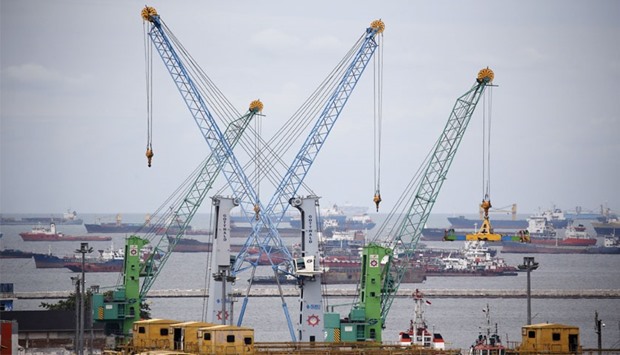
Ships at a port in North Jakarta. Indonesia’s trade balance moved back into surplus in 2015, after three years of deficits, but the turnaround mostly showed how sluggish the economy has been.