


A day after deadly gun and bomb attacks rocked the Indonesian capital, Jakarta’s food peddlers, taxi drivers and shopkeepers returned to life as normal, more concerned with making a dollar than the Islamist assault.
Thursday’s bloody violence left two people and the five attackers dead, but the bigger concern for many residents remained the daily struggle to get ahead.
The smoke had barely cleared after the attacks, claimed by the Islamic State group, before Jakarta’s heaving metropolis quickly returned to its bustling self—with ubiquitous food vendors re-emerging at the site just a couple hours later to sell afternoon snacks.
Motorbike taxi driver Asrul, who like many Indonesians goes by one name, said he was nearly hit in the crossfire of the shootout between attackers and police in a busy area of shopping malls and embassies, but didn’t stopped seeking fares in the area.
“I could not make any money yesterday because of the attack, if I don’t work today how will I feed my family?” he said.
Social media-mad Indonesia is estimated to have one of the world’s largest populations of Twitter users, who were quick to post about the attack.
Tweeters denounced terrorism, with hashtags such as “We Are Not Afraid” surging to the top of global trending lists in a symbol of defiance.
But Indonesian attention has proven easily diverted by lighter subjects, such as viral photos of a hunky gun-wielding Jakarta policeman involved in the response to the crisis and who has become a national heartthrob.
Another widely posted image was of a satay peddler who stubbornly kept fanning his coal fire just 300 feet (91 metres) from the attack site, later saying he was afraid his cart might be stolen.
Jakarta-based terrorism analyst Rakyan Adibrata said the public response points to an Indonesian skin thickened by a history of political and economic crises, natural disasters and persistent corruption.
“Indonesians are sick of horrible things happening to them, so when something even more horrible happens, they collectively fight that by turning to the inane,” he said.
The attacks actually became a business opportunity for Dodi Setiawan, a bottled drinks vendor who rushed to the site shortly after the carnage, expecting crowds of thirsty gawkers.
He sold out in minutes, and returned again and again with fresh stock, staying until dawn yesterday.
“I always chase the crowd, so if there’s a massive demonstration or an unrest, I’ll be there,” he declared.
“I’m afraid of God, not terrorists.”
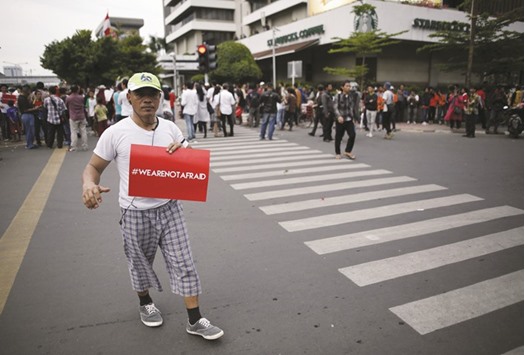
A man holds a placard during a rally at the scene of Thursday’s gun and bomb attack in central Jakarta yesterday.