


Low public debt and large stocks of foreign reserves at the Qatar Central Bank (QCB) will enable Qatar to honour its debt obligations comfortably, despite the oil price slump, the Economist Intelligence Unit (EIU) said in a recent overview.
Further support comes from even larger holdings in the country’s sovereign wealth fund, the Qatar Investment Authority, and fiscal surpluses accumulated in previous years. However, a prolonged slump in oil prices (not the EIU’s central scenario) could undermine the rating.
The EIU expects the country’s current account to move into surplus in 2017 as oil prices begin to recover. Currency stability will also be maintained by the riyal’s peg to the dollar, and a revaluation is not expected in the forecast period. The QCB has large stocks of foreign-exchange reserves that could be used to defend the peg if necessary.
But it said low hydrocarbons earnings will have “negative implications” for banking asset quality. Qatar has one of the lowest non-performing loan ratios in the region, although the high loan-deposit ratio increases the risk of asset impairment in the banking sector.
Continued low oil prices will push the fiscal account into deficit and keep the current account in deficit, before both accounts move into surplus in 2017.
However, the non-hydrocarbons sector is now the primary contributor to GDP growth and the government is investing heavily in economic diversification.
“There is a risk of overheating, owing to the high level of public expenditure planned in the run-up to the 2022 football World Cup,” the EIU said.
According to the EIU, all the countries in the region, with the exception of Qatar, had a fiscal break-even oil price above the estimated average of $53 a barrel in 2015 (and the forecast level of $53.2 in 2016). In an earlier report, the EIU had said seven of the nine Mena (Middle East and North Africa) nations (excluding Yemen, whose production has almost entirely ceased in the wake of the country’s civil war) made some steps towards bringing down their break-even level.
These reflect a combination of lower capital spending (in virtually all cases); higher oil production (in Oman, Saudi Arabia, UAE, Iran and, especially, Iraq); and other transitory factors.
It said governments in the Mena region are moving towards “fiscal reality” in view of the sustained low oil prices, making efforts to manage their public finances, a recent report has shown.
Initially, in 2015 most of the region’s oil exporters chose the counter-cyclical approach, propping up spending by running down the huge reserve buffers built up during the years of rising prices, the EIU has said in an analysis.
However, as 2016 has honed into view and global oil prices have touched 11-year lows, governments finally appear set to make a concerted effort to “repair” their public finances, it said.
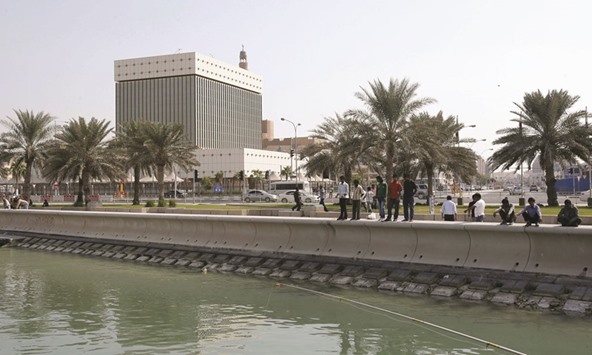
The Qatar Central Bank has large stocks of foreign exchange reserves that could be deployed to defend the riyal’s peg with the dollar if necessary, according to the EIU.