


The government is getting ready to open up commercial coal mining to private companies for the first time in four decades, with the aim of shifting the world’s third-biggest coal importer towards energy self-sufficiency.
Anil Swarup, the country’s top coal bureaucrat, yesterday said the government has identified mines it plans to auction, and is now finalising other terms such as eligibility criteria for companies to take part and whether and how to set up revenue sharing.
He said a plan should be ready in the 2-3 months, setting a clear timeline on a plan that has previously only been vaguely marked out.
The government has an ambitious plan to double coal production to 1.5bn tonnes a year by 2020, as part of Prime Minister Narendra Modi’s push to bring power to 300mn people who live without electricity, and give a boost to manufacturing.
It would also support the government’s efforts to develop the eastern parts of the country, which are resource-rich and hold most of India’s coal reserves but have lagged the western states in development.
State-owned Coal India is on track to produce 1bn tonnes a year by the end of this decade, and the government is counting on private firms to produce the remaining 500mn tonnes - which may prove a tough target to achieve.
As of now, only Coal India and a small government-owned company are allowed to mine and sell coal in India.
“It’s imperative that the government opens up the sector so that private companies can bring in new technologies and the efficiencies that we keep talking about,” said Dipesh Dipu at energy-focused Jenissi Management Consultants. “But I don’t think private companies will be able to produce more than 100mn tonnes this decade as the process has yet to start.”
The move is likely to attract coal block bids from Indian conglomerates such as the Adani Group and GVK, but the government may find it harder to lure big multinational miners such as Rio Tinto, BHP Billiton, Anglo American and Peabody Energy. Rio Tinto did not respond to requests for comment.
Coal prices are at multi-year lows amid global oversupply, and foreign companies have faced obstacles to investing in India, such as problems in getting land and environmental approvals.
Some private companies also worry that the best quality mines would be left for Coal India.
Swarup was handpicked by Modi to lead a turnaround in the coal sector soon after the prime minister came to power in 2014.
Under Swarup’s watch, Coal India has seen record production growth, and the government auctioned off a series of coal blocks successfully. Coal imports fell for a sixth straight month in December.
Swarup said there were still some aspects of the plan to bring in private players that needed to be examined carefully.
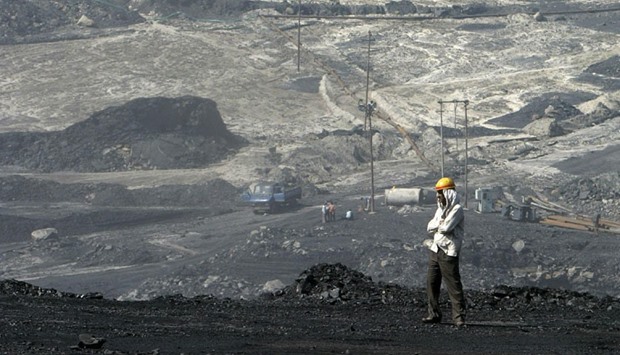
A miner stands at the Gevra coalmines in Chhattisgarh, India is getting ready to open up commercial coal mining to private companies for the first time in four decades, with the aim of shifting the world’s third-biggest coal importer towards energy self-sufficiency.