


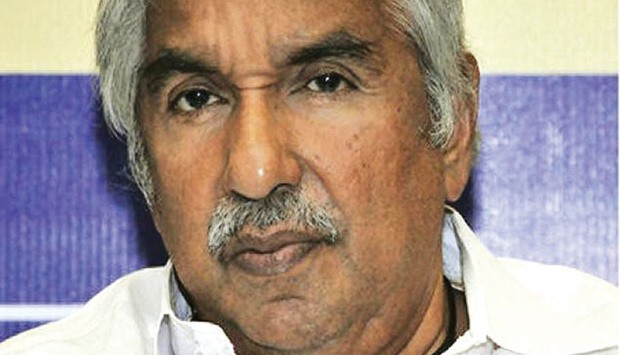
Kerala Chief Minister Oommen Chandy yesterday met Modi and Foreign Minister Sushma Swaraj and registered the state’s protest against the merger and the scaling down of the annual diaspora meet as part of the Pravasi Bharatiya Divas celebrations.
“It took all by surprise,” he told reporters in New Delhi. “The premier justified the decision saying it would only improve things, which was not entirely convincing. I have given my objections in writing,” Chandy disclosed.
The MoIA was formed almost 12 years ago at the instance of the state, which was the first to form a separate ministry for the diaspora when A K Antony was chief minister in 2001 and started holding annual conventions to hear expats’ grievances.
“The ministry was functioning efficiently and had done a lot of good for the diaspora. A lot remains to be done,” Chandy said.
The federal government also made the high-profile meet held on January 8-9 every year, marking the return of Mahatma Gandhi from South Africa on January 9, 1915, a biennial event with a partner state beginning next year.
“It was a platform for the diaspora to air their demands and grievances and an opportunity for the government to interact with them,” said K C Joseph, the state’s minister for the diaspora.
The then prime minister Atal Behari Vajpayee had kicked off the celebrations in 2003, offering 5% merit quota for children of Indian workers in the Gulf in engineering colleges across the country with normal fees.
Vajpayee lost the general elections held the next year and his successor Dr Manmohan Singh created a separate ministry for the diaspora.
“Norka (the state’s agency that looks after the welfare of the diaspora) will face a tough time after the merger. This decision should be reviewed,” former Kerala chief minister Achuthanandan said in a statement here.
The initiative was seen as a belated first step towards Modi’s poll-time promise of “minimum government and maximum governance” - 19 months after he took over the reins of the country from Dr Singh, who also had two separate cabinet ministers for the two departments.
The government feels the merger would help avoid duplication of work and save a lot of time and energy. Unlike her predecessor, Swaraj has earned praise for swift and effective intervention to repatriate workers stranded in conflict zones and help citizens in distress abroad.
She even ensured prompt action on complaints received on her Twitter handle.
“As minister for external affairs & overseas Indian affairs, I realised that a substantial amount of work of the MoIA is done through our missions abroad,” she tweeted. “Therefore, I proposed to the prime minister that the MoIA be merged with the ministry of external affairs.”
“This merger will help us dovetail our outreach to the diaspora with our foreign policy objectives better,” she said.
Former federal minister and Congress leader, Prof K V Thomas, said the MoIA has been focussing on efforts to resolve the issues faced by Indian expats, a majority of whom are poor and unskilled, while the MEA concentrated on diplomatic and trade relationships.
“This will dilute the care for NRIs (non-resident Indians),” he warned. “With separate ministries, responses do not get diluted as the MoIA is able to focus on our diaspora’s issues.”
He pointed out that the diaspora last year contributed Rs4.83tn, and this financially justified the need for a separate ministry. They also make significant investments in India which is comparable to large FII inflows, Thomas pointed out.
“The cost of running a ministry is fairly insignificant, especially when compared with the benefits generated,” he added.
Chandy also urged Modi to clear the hurdles in the recruitment of nurses to Gulf countries. He said the premier has promised to resolve the issue in a week.