


 |
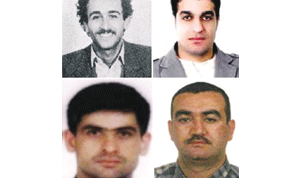
| A combination of handout pictures obtained yesterday from the website of the Special Tribunal for Lebanon shows four Hezbollah suspects indicted in the assassination of former Lebanese prime minister Rafik al-Hariri (from top, left to right): Mustafa Amine Badreddine, Assad Hassan Sabra, Hussein Hassan Oneissi and Salim Jamil Ayyash |
Lebanon received the indictments and four arrest warrants from the Special Tribunal for Lebanon (STL) last month. While the suspects were not named then, Lebanese officials said the accused were members of the Shia militant movement Hezbollah.
Hezbollah accuses the tribunal of being a tool of the US and Israel and denies any link to the 2005 assassination.
Pre-trial judge Daniel Fransen ordered the lifting of confidentiality on the full names, aliases, biographical information, photographs and charges against the individuals named in the indictment, the tribunal said in a statement.
“The Prosecutor further submits that making the requested information available in public fora may increase the likelihood of apprehending the accused in the event that any of them are noticed by the public,” the tribunal said in a statement.
There was no immediate reaction from Hezbollah, but an analyst said the release of the names was unlikely to help catch the suspects because the men were no longer in the country.
Hilal Khashan, a Lebanon-based political commentator, said that the Lebanese government, which is backed by Hezbollah, was unable to assist the tribunal.
“The government says they are co-operating with the tribunal but they haven’t found anyone. We know that the four members are not in Lebanon. Hezbollah removed them from the scene to help the government, which can now say it looked for the four but couldn’t find them,” he said.
“Hezbollah did this because it would be very embarrassing for the government if the four were on Lebanese territory.”
The suspects named were Mustafa Amine Badreddine, a senior Hezbollah figure and brother-in-law of slain Hezbollah commander Imad Moughniyeh, as well as Salim Jamil Ayyash, Hussein Hassan Oneissi and Assad Hassan Sabra.
Ayyash and Badreddine face five charges, the STL said, including “conspiracy aimed at committing a terrorist act; committing a terrorist act by means of an explosive device; intentional homicide of Rafik Hariri with premeditation by using explosive materials; intentional homicide of 21 persons in addition to Rafik Hariri with premeditation by using explosive materials; and attempted intentional homicide of 231 persons with premeditation by using explosive materials.”
Oneissi and Sabra also face a charge of conspiracy to commit a terrorist act and are accused of being accomplices in the other four other charges levelled against Ayyash and Badreddine.
On July 8, the judge issued an international arrest warrant against the accused and it authorised the prosecutor’s office to give it to Interpol to issue a “red notice” on the suspects.
“The order states that prosecutor Daniel A Bellemare, after consultations with the Lebanese prosecutor general, indicated that lifting the confidentiality of this information ‘does not contradict Lebanese law with regards to the executed arrests’,” the STL said.
Hariri’s assassination plunged Lebanon into a series of political crises, killings and bombings that led to sectarian clashes in May 2008, dragging the country back to the brink of civil war.
Earlier this month, Hezbollah leader Hassan Nasrallah said the authorities would never arrest members of the Shia militant group. He dismissed the accusations as unfounded and a failed attempt to sow strife and bring down Lebanon’s new Hezbollah-backed government.
“They cannot find them or arrest them in 30 days or 60 days, or in a year, two years, 30 years or 300 years,” Nasrallah said at the time.
Following the issue of the arrest warrants, Lebanese authorities have until August 11 to inform the tribunal of the measures taken.