


AFP/Manama
 |
|
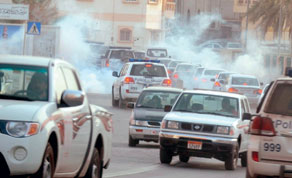
Bahraini anti-riot police vehicles storm through a cloud of tear-gas as they chase protesters on the streets of Bilad Qadem village on the outskirts of the Manama yesterday. Scores of protesters and police clashed after a group identifying itself as ‘February 14th’ attempted to organise a rally in the village under the slogan of ‘right of determination 2’ to call for more freedoms and the release of detainees |
Bahrain’s main Shia opposition formation will shun parts of the national dialogue which the authorities say aims to bring forward reforms in the restive kingdom, a member said yesterday.
“We will boycott the meetings of the economic and social committees but will continue to attend the meetings of the political and rights committees,” said Khalil al-Marzooq, a leading member of the Islamic National Accord Association (Al Wefaq).
“We believe the dialogue should discuss major political and security issues,” Marzooq said.
“This dialogue will not lead to a solution... and it does not fulfil the needs to pull Bahrain out of its political crisis,” Marzooq said.
Al Wefaq’s former MP said the dialogue participants do not fairly represent society and that those participating are not being given chance to speak during the sessions.
UN chief Ban Ki-moon yesterday welcomed Bahrain’s move to begin the national dialogue, saying it can help bring about reconciliation if it is genuine and inclusive.
“We welcome the opening of a national dialogue in Bahrain. Conducted properly, it can be a force for stability, national healing and change,” Ban said. “That dialogue must be genuine, fully inclusive and... must set a stage for real reforms that meet the legitimate aspirations of the Bahrain people.”
Meanwhile, hundreds of people took to the streets in several Shia villages across Bahrain yesterday, chanting “Down, down (King) Hamad,” witnesses said.
Police fired warning shots to disperse protesters in Bilad Al Qadeem near the capital Manama, the same sources said.
Bahrain on Tuesday held the first session of its national dialogue, which is attended by about 60 participants each in simultaneous sessions on politics, the economy, human rights and social issues - the four axes on which the dialogue is to focus.
The sessions are scheduled for three times a week - on Sundays, Tuesdays and Thursdays.
The dialogue comes after Bahraini security forces carried out a mid-March crackdown on Shia-led protesters who had been demonstrating for reforms in the Sunni-ruled, Shia-majority kingdom since February 14.
Authorities said 24 people, most of them demonstrators, were killed in the unrest.
The national dialogue was officially launched last Saturday, with more than 300 people invited to attend, including Al Wefaq representatives.
Al Wefaq, which made an 11th-hour decision to participate, only has five representatives at the dialogue, despite winning 18 out of 40 seats in the lower house of parliament in the last elections.
Marzooq said on Tuesday that all options were open, including pulling out of the dialogue if it fails to address “the will of the people.”