


Reuters/Dhaka/Tokyo
Abu Said Shekh was awakened in his cell at a Japanese immigration detention centre one recent morning and told he was leaving for the airport. After nine years of seeking political asylum in Japan, he was being
deported to Bangladesh.
He was among 22 illegal immigrants, including an undisclosed number of asylum seekers, that were put on a state-chartered plane and flown back to Bangladesh on November 25, Japan’s Justice Ministry said.
Now back in Dhaka, Shekh is in hiding, saying he fears for his safety on what he calls a trumped-up court indictment on charges stemming from his membership in Awami League, then the main opposition party.
“I can’t stay with my family,” said Shekh by telephone. “I’m very worried about the court case and whether I’ll be arrested again.”
Shekh featured in a Reuters investigation in July into the use of asylum seekers and other migrant workers in an automaker supply chain. At the time, he painted interior car parts, working illegally but protected from deportation while his asylum claim was being assessed.
Reuters found that firms, facing severe labour shortages and straining to meet soaring demand from the United States, had turned to a grey market of foreign workers, including asylum seekers.
Shekh was charged with attacking police and damaging public property with explosives during a demonstration in 2002 by the Awami League, then the party in opposition.
Political violence is common in Bangladesh, which has been alternately ruled by the Awami League, which is now in power, or the Bangladesh Nationalist Party for the past 24 years.
The recent execution of two opposition leaders for atrocities committed in the 1971 war of independence has further heightened tensions.
Shekh said he came to Japan in 2003 to escape the indictment and overstayed his visa. He first claimed asylum in June 2006 and said he applied again five years later, working throughout his time in Japan.
He was arrested on November 20 and held in an immigration detention centre in Tokyo. Four days later, Shekh was told his appeal of Japan’s decision not to grant him asylum had been rejected. He was deported along with 21 other Bangladeshis.
It was the fourth round of the justice ministry’s programme of forced deportations by chartered planes. Japan deported 26 Sri Lankan and six Vietnamese nationals in 2014, and 74 Filipinos and 46 Thais the year before, the justice ministry said. It added that an unspecified number of failed asylum seekers were among the deportees in each round.
Over 5,500 people were deported from Japan last year, government data show. It does not say how many of them were failed asylum seekers like Shekh.
Opening up to immigration remains politically unpalatable in Japan, despite severe labour shortages caused by an ageing population.
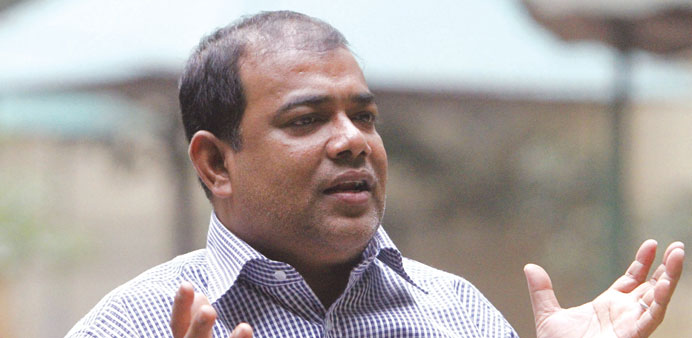
Failed asylum seeker, Abu Said Shekh, talks to a friend in Dhaka.