


 |
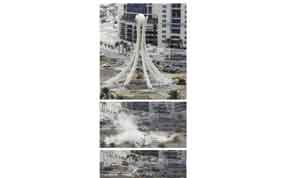
| Pictures show the statue in the centre of Pearl Square being torn down in Manama yesterday. The statue at the centre of Pearl roundabout was the focal point and symbol of weeks of protests in the island kingdom. Drills and diggers cut away at the six bases of the statue for hours, until it collapsed into a mound of rubble and steel bars. Trucks stood by to take away the debris |
Sheikh Khaled bin Ahmed al-Khalifah said three or four Gulf states were sending troops and the forces would remain for as long as it took to bring calm after protests by the Shia majority slid into sectarian violence and crippled the economy.
Their role would be limited to guarding strategic assets such as oil facilities, however, and they would not be involved in quelling protests, he told a news conference in Manama.
“We look with all confidence to the return of normal life in Bahrain,” Sheikh Khaled said. “We know dialogue is our path.”
Bahrain has arrested seven opposition leaders and driven pro-democracy demonstrators from the streets after weeks of protests that prompted the king to declare martial law.
Three protesters died in the security sweep. Three policemen were also killed, hit by cars driven by demonstrators.
Yesterday, diggers tore down the statue at the centre of Pearl roundabout, focal point of weeks of protests, in what the foreign minister said was an effort to erase “bad memories”.
Shouting slogans, thousands buried an activist killed in a crackdown that has angered Iran and raised tension in the world’s largest oil-exporting region.
Mourners carrying pictures of activist Ahmed Farhan, killed on Wednesday, followed a car carrying his flag-covered coffin.
A helicopter buzzed overhead and tanks lined the entrance to Sitra, where Farhan was buried, but did not disperse mourners.
Sheikh Issa Qassim, Bahrain’s most influential Shia cleric, said in his Friday sermon that Gulf troops would have been better off helping Palestinians in Gaza than entering Bahrain and thanked those who died or resigned.
“The violence of the authorities has created a deep, wide and dangerous wound between the government and people,” he said.
Sheikh Khaled said, however, that the royals had done their utmost to push for dialogue, allowing protests and offering assurances, but the opposition had rejected talks and started blocking main streets, while civilians began to clash daily.
“In volatile situations you do expect violence to happen but there is no systematic violence against the people,” he said.
In an effort to wipe out all trace of the uprising, drills hammered at the base of Bahrain’s most recognisable landmark until it collapsed into a mound of rubble yesterday.
The statue comprised six sails symbolising each of the six members of the Gulf Co-operation Council, holding up a pearl, symbol of the pearl fishing heritage that was the economic mainstay of the region before the discovery of oil.