


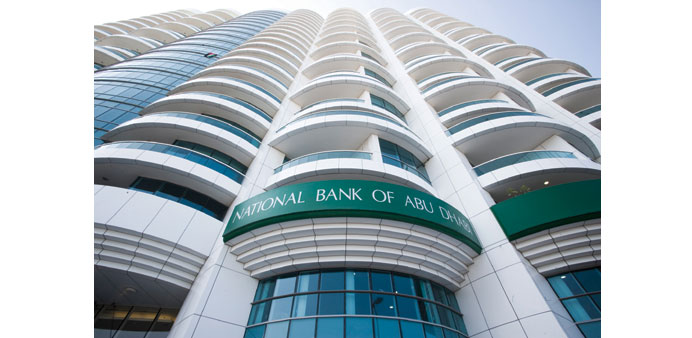
National Bank of Abu Dhabi has been the top lender from the six-member GCC to Turkish institutions for the past three years
Bloomberg
Dubai
Banks in the Gulf region are doing more loan business in Turkey than at any time in at least six years.
Lenders from nations including the UAE and Qatar boosted syndicated loans to institutions in Turkey by half this year to $2.4bn, more than in any full year since at least 2009, according to data compiled by Bloomberg. Acquisitions business is picking up too, with Qatar National Bank, the Gulf country’s biggest bank, holding preliminary talks to buy Turkey’s Finansbank AS, and Dubai’s Mashreqbank also seeking options to expand in the country.
The trend illustrates how Gulf banks are increasingly looking outside their region to boost returns and diversify their customer base away from limited home markets. For all the risks of expanding business in Turkey - from a depreciating currency to terrorist attacks to political deadlock - the country’s growing economy remains the biggest in the Middle East with a population larger than that of the six members of the Gulf Cooperation Council combined.
“There are a lot of lending opportunities as the overall economy is growing and the demographics are very favourable,” Chiradeep Ghosh, a banks analyst at Securities & Investment Co in Bahrain, said by phone on October 18. “The returns are quite attractive but the prime risk is the currency that the banks will have to take on their books, or hedge at a cost.”
The lira has dropped about 20% this year, the most among 24 emerging-market currencies tracked by Bloomberg after Brazil’s real.
Costs for Turkey’s banks, as measured by the amount they charge to lend each other for three months, surged to 11.89% this month, the highest since April 2014. It was at 11.48% on October 20, according to data compiled by Bloomberg. The comparable rate was at 0.84% in the UAE and 1.21% in Qatar.
Suspected suicide bombers killed 102 people at a peace rally in Ankara on October 10. Turks will vote on November 1 for the second parliamentary election this year, repeating an inconclusive June ballot that roiled markets by failing to produce a majority government.
The outlook for Turkey “doesn’t look good this year and the next with the currency risk a definite downside,” Sanyalak Manibhandu, the director and head of research at NBAD Securities, said by phone last week. “I don’t know if the returns factor in all the currency risks. Perhaps they see that over the term of the lending returns would be good.”
Gulf banks are seeking to expand into foreign countries after their dependence on home markets hurt them during the global financial crisis. National Bank of Abu Dhabi, the biggest bank in the UAE, is building hubs in eight global cities. Emirates NBD announced plans in 2012 to boost international revenue to 20% of the total from 5% over a five-year period.
National Bank of Abu Dhabi has been the top lender from the six-member GCC to Turkish institutions for the past three years, the data show. It has lent $571.3mn this year. Abu Dhabi’s First Gulf Bank provided $566.3mn and Bahrain’s Bank ABC $313mn.
Overall, syndicated lending in Turkey in 2015 has surged 37% from the same period a year ago to $31.4bn, with Gulf banks providing about 8% of the loans.